

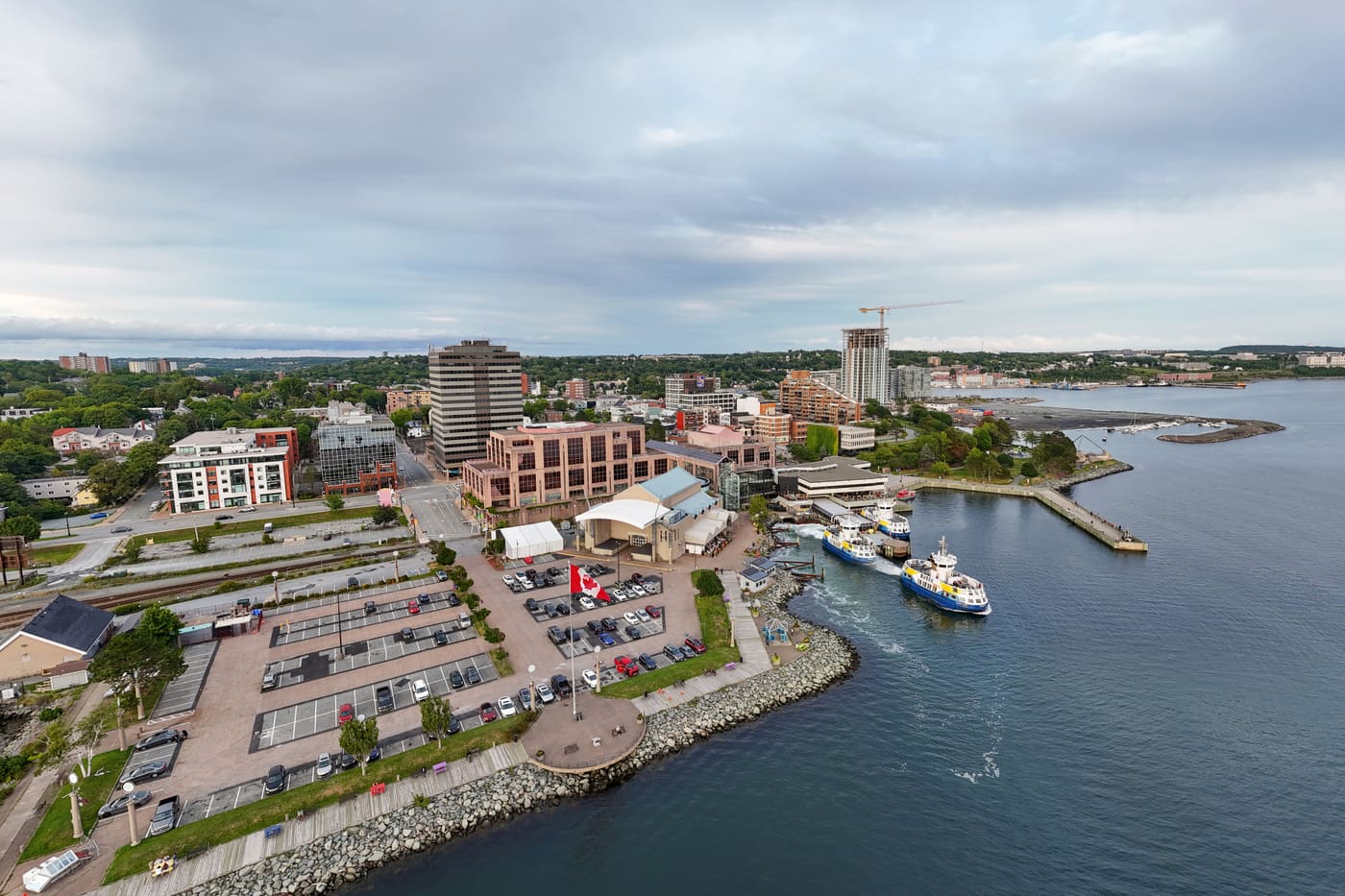
Dartmouth
Mortgage affordability calculator
The mortgage and the purchase price your income supports under the federal stress test, with your GDS and TDS ratios. Or start from a price and see the income it takes.
How much mortgage can I afford?
On a household income of $100,000 with $25,000 down and no other debts, about $412,152 of mortgage, which includes the $15,852 insurance premium, and a purchase price near $421,300, at 4.45% over 25 years. Lenders test you at the greater of the contract rate plus 2% and 5.25%, here 6.45%, and cap housing costs at 39% of gross income and all debts at 44%.
How much house can you afford? Run your numbers
Enter your income, debts and down payment to see the highest price the two ratios allow, or switch to a price and see the income it takes. The rules are federal, so the answer holds anywhere in Canada.
Some call this a mortgage qualification calculator or a mortgage pre-approval calculator. It applies the same stress test and the same two ratios a lender starts with, to the figures you type. It is not a pre-approval: that is a lender checking them.
How much house each income supports
A home affordability table by household income. Each row assumes only the minimum down payment for its price, at 4.45% (chartered-bank prime rate, Bank of Canada, 2026-09-30) qualified at 6.45%, 25 years, property tax at 1% of the price a year and heat at $150 a month. The calculator above starts with $25,000 down rather than the minimum, which is why its figure for $100,000 differs.
| Household income | Maximum price | Down payment | With a $500 debt | Cost of the debt |
|---|---|---|---|---|
| $60,000 | $242,500 | $12,125 | $208,800 | −$33,700 |
| $80,000 | $330,100 | $16,505 | $307,600 | −$22,500 |
| $100,000 | $417,700 | $20,885 | $406,400 | −$11,300 |
| $120,000 | $505,500 | $25,550 | $505,500 | $0 |
| $150,000 | $643,300 | $39,330 | $643,300 | $0 |
Debts up to 5% of gross monthly income cost nothing, because TDS allows 5 points more than GDS: about $417 a month on $100,000. That is why the $500 payment takes nothing off at $120,000 or $150,000. Past that point every dollar of debt payment comes out of the mortgage payment you qualify for. If a loan is the limit, see debt consolidation.
Go deeper
The detail, if you want it
GDS and TDS: the two debt service ratios
Gross debt service (GDS) is the mortgage payment at the qualifying rate, plus property tax, heat and half of any condo fee, as a share of gross income: at most 39%. Total debt service (TDS) adds every other monthly debt: at most 44%. With no other debt GDS binds first. TDS takes over once debts pass 5% of gross monthly income.
How the two ratios cap the purchase priceThe worked example from the top of the page: $100,000 of household income, $25,000 down, no other debt
- 39%gross debt service limit: mortgage payment at the qualifying rate, property tax, heat, half of condo fees
- 44%total debt service limit: the same, plus every other monthly debt
- $421,300maximum purchase price on $100,000 with $25,000 down and no other debt, qualified at 6.45%
- −$33,700what a $500 monthly debt payment takes off the maximum at $60,000 of income, with the minimum down payment
Limits from CMHC, qualifying rate from OSFI. 4.45% (chartered-bank prime rate, Bank of Canada, 2026-09-30) qualified at 6.45%, 25-year amortization, premium financed, property tax at 1% of the price and heat at $150 a month.
The stress test: how your rate changes the answer
You do not qualify at the rate you pay. Lenders test the payment at the greater of the contract rate plus 2% and 5.25%, so at 4.45% the test is 6.45%. A calculator that tests everyone at the 5.25% floor shows $462,900 on the same figures, about 10% more than the rule allows at that rate.
| If your rate is | You are tested at | Maximum mortgage | Maximum price |
|---|---|---|---|
| 3.25% or lower | 5.25% | $455,416 | $462,900 |
| 3.45% | 5.45% | $447,720 | $455,500 |
| 3.95% | 5.95% | $429,416 | $437,900 |
| 4.45% | 6.45% | $412,152 | $421,300 |
| 4.95% | 6.95% | $396,032 | $405,800 |
| 5.45% | 7.45% | $380,744 | $391,100 |
For the payment itself at any rate and frequency, use the mortgage payment calculator. Current reference rates are on the Nova Scotia mortgage rates page.
Income needed to buy in each Nova Scotia region
The rules above are the same in every province. This table is the Nova Scotia layer: each region’s average price and the household income it takes with the minimum down payment and no other debt. Nova Scotia charges no sales tax on the insurance premium.
| Region | Average price | Minimum down payment | Income needed |
|---|---|---|---|
| Halifax-Dartmouth | $592,675 | $34,268 | $138,963 |
| Northern Nova Scotia | $332,251 | $16,613 | $80,484 |
| Highland Region | $367,859 | $18,393 | $88,615 |
| Cape Breton | $289,859 | $14,493 | $70,804 |
| Annapolis Valley | $394,019 | $19,701 | $94,589 |
| South Shore | $455,127 | $22,757 | $108,543 |
| Yarmouth | $313,944 | $15,698 | $76,304 |
| Nova Scotia | $467,585 | $23,380 | $111,387 |
If the down payment is your limit, run the province’s Down Payment Assistance Program calculator and read the first-time buyer programs. Whether buying beats another lease at these prices is a separate sum: the rent vs buy calculator runs it for Halifax.
The figure a seller takes seriously is a pre-approval: verified income, credit and down payment, with a rate held.
Why a broker
Licensed, independent, paid by the lender
- Licensed in Nova Scotia Associate broker 3001134, verifiable on the provincial register
- $0 broker fee On a standard residential mortgage the lender pays, not you
- Banks, credit unions, monolines One application, one credit check, placed with the lender that reads your file best
- Every part of the province Bedford office, remote process: Yarmouth to Sydney, the same four steps
Questions people ask
How much mortgage can I afford?
Lenders work it out from two ratios at a qualifying rate, not from the rate you pay. Housing costs can take up to 39% of gross income (GDS), and housing costs plus other debts up to 44% (TDS). On $100,000 of household income with $25,000 down and no other debt, that is a mortgage of about $412,152, which includes the $15,852 insurance premium, and a price near $421,300 at 4.45%, the chartered-bank prime rate, Bank of Canada, 2026-09-30.
What is the mortgage stress test, and what rate am I tested at?
Federally regulated lenders must test your payment at the greater of the contract rate plus 2% and 5.25%. On a 4.45% contract that is 6.45%. A calculator that tests everyone at the 5.25% floor would show $462,900 for the example on this page instead of $421,300, about 10% more than the rule allows at that rate.
What are GDS and TDS?
Gross debt service (GDS) is the mortgage payment at the qualifying rate plus property tax, heat and 50% of any condo fees, divided by gross income. CMHC’s limit is 39%. Total debt service (TDS) adds car loans, student loans, support payments and 3% of card and line of credit balances. Its limit is 44%. In the example on this page both are 38.99%, because there are no other debts.
How much does a car payment reduce what I can afford?
A $500 monthly payment lowers the maximum price by about $33,700 on $60,000 of income and about $11,300 on $100,000, with the minimum down payment at 4.45%. Debts up to 5% of gross monthly income fit between the two limits and cost nothing: about $417 a month on $100,000. The same payment costs more at a lower income.
What income do I need to buy a house in Nova Scotia?
At the August 2026 provincial average of $467,585, with the minimum down payment of $23,380 and no other debt, about $111,387 of household income at 4.45%, qualified at 6.45%. At the Cape Breton average of $289,859 it is about $70,804, and at the Halifax-Dartmouth average of $592,675 about $138,963. Each assumes property tax at 1% of the price and $150 a month for heat.
Is this the same as a mortgage pre-approval?
No. This is arithmetic on figures you typed. A pre-approval is a lender reviewing verified income, credit and down payment documents, then holding a rate, typically for 90–120 days. It is the figure a seller takes seriously, and it can come in lower or higher than a calculator.

Still unsure? Ask me directly.
If your question isn't here, your situation is probably specific. Fifteen minutes on the phone beats reading another page, and nothing is pulled on your credit.
(902) 298-0218 · Monday to Friday, 8:00 am to 10:00 pm Atlantic
Want to know what you can actually qualify for?
A pre-approval takes 1–3 business days once your documents are in and holds a rate for 90–120 days while you shop.
(902) 298-0218 · Monday to Friday, 8:00 am to 10:00 pm Atlantic