

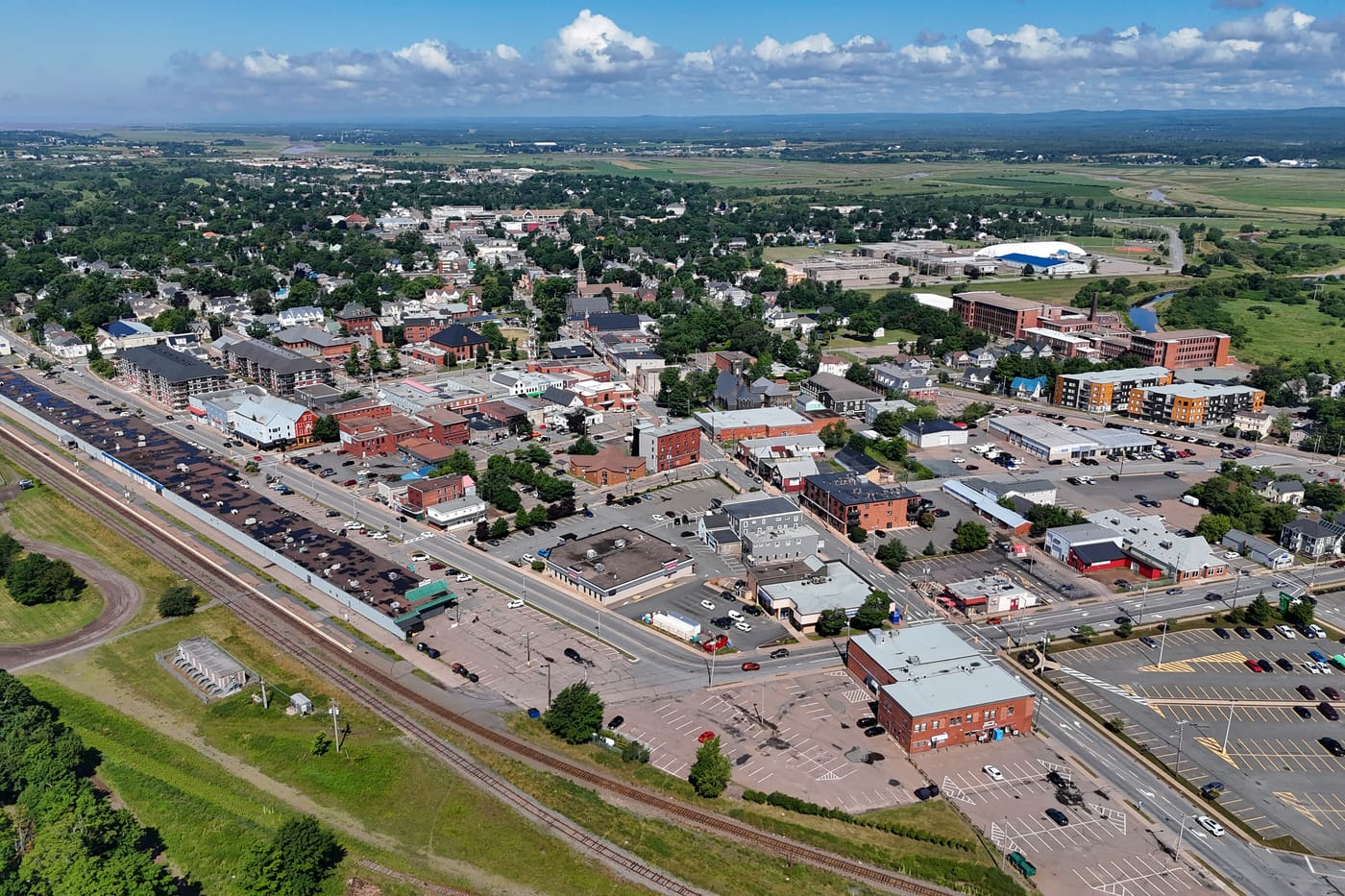
Truro
Mortgage pre-approval in Nova Scotia
A real pre-approval comes from a lender after a look at your income, credit and down payment: one to three business days, a rate held 90 to 120 days, no fee, and a letter that makes your offer credible. The form is on this page.
How long does mortgage pre-approval take in Nova Scotia, and what does it cost?
One to three business days once your documents are in, and nothing: the lender pays the brokerage if a mortgage eventually funds. You get a maximum purchase price, a rate held for typically 90 to 120 days, and a written letter to put behind your offer.
What a pre-approval guarantees, and what it does not
A pre-approval is a lender’s statement that, on the income, credit and down payment you have documented, you qualify for up to a stated amount at a rate held for a stated period. It is not a commitment to lend on a specific house: the property has not been seen, appraised or insured.
You know the ceiling before you shop, your offer carries weight, your financing condition can be short, and if rates rise you keep the held rate. It does not survive a change in your circumstances.
From documents to a firm approval
- Guaranteed: your rate (steps 3–4)
- Not guaranteed: the property (step 5)
- Documents gathered Income, credit, down payment
- Lender review 1–3 business days
- Pre-approval letter $0 to you
- Rate hold 90–120 days
- Offer accepted, full approval 5–10 business days On the property and its appraisal
A pre-qualification comes before all of this: a phone call and a rough range, with no documents and no credit check. Typical Nova Scotia timings; the rate-hold length depends on the lender. Last verified September 20, 2026.
Pre-qualification, pre-approval, commitment
| Comparison | Pre-qualification | Pre-approval |
|---|---|---|
| What it is based on | What you tell me on the phone | Documented income, credit and down payment |
| Credit inquiry | None | One, with your written consent |
| How long | Minutes | 1–3 business days from complete documents |
| Rate held | No | Typically 90–120 days |
| Worth anything to a seller | No | Yes — a letter to attach to the offer |
| What it costs you | $0 | $0 |
If you search for "home loan pre-approval" or "getting approved for a home loan", it is the same thing: in Canada the product is called a mortgage, and the process on this page is what you are looking for.
The lenders your application actually goes to
A bank branch can offer you one lender’s products. These are the ones an application can be placed with instead — and the reason the answer to “can this be financed?” is more often yes.
Banks
Chartered banks and the broker channels they run. B2B Bank is a bank that lends only through brokers — you cannot walk into a branch and ask for it.
- BMO
- CIBC
- Desjardins
- National Bank
- RBC Royal Bank
- Scotiabank
- TD
- B2B Bank
Monoline and institutional lenders
Lenders that do mortgages and little else, plus insurers that lend directly. No branches and no chequing account to open; most are reached only through a broker.
- CMLS Financial
- First National Financial
- MCAP
- MERIX Financial
- Radius Financial
- RFA
- RMG Mortgages
- Strive Capital
- Highclere Capital
- Assumption Life
Alternative and B lenders
Where the income or the credit does not fit an A-lender policy: self-employed income that looks thin on paper, bruised credit, a short time in Canada, or a property an A-lender will not take.
- Equitable Bank
- Home Trust
- Haventree Bank
- WealthONE Bank of Canada
- Peoples Group
- Community Trust
- Indigo Blue
MIC and private lenders
Short-term, equity-led lending for a file that needs time before it can move back to an A or B lender. Five of these are Atlantic Canadian, which matters on rural and non-standard property.
- Firm Capital
- MCAN Financial
- Magenta Capital
- Capital Direct
- Alternative Financing Options
- Atlantic Signature Mortgage & Loan
- East Coast Private Lending
- Graysbrook Capital
Go deeper
The detail, if you want it
What the lender checks
- Income. Salaried on a letter of employment and pay stubs; hourly, overtime and bonus on two years of T4s; self-employed on two years of Notices of Assessment; seasonal and fishery income averaged over two years. The documents checklist →
- Debt ratios at the stress test. Housing costs within 39% of gross income, and all debts within 44%, calculated at the greater of the contract rate plus 2% and 5.25%.
- Credit. An insured mortgage needs at least one borrower at 600 or higher.
- Down payment. 90 days of statements showing where it came from: savings, an FHSA or RRSP, a gift from immediate family with a gift letter, or the sale of a home.
Getting approved for a mortgage when the numbers are tight
A decline is usually one of four numbers, and three of them move. Housing costs have to sit within 39% of gross income and all debts within 44%, both measured at the greater of the contract rate plus 2% and 5.25% rather than the rate you will actually pay.
- Debt payments. A car loan is the classic: its monthly payment comes straight out of the price you qualify for. Paying out or refinancing one small balance often moves more than a rate discount would. Test it in the affordability calculator →
- The down payment. Crossing from 5% to 10% or 20% changes the premium, and at 20% the file is uninsured, which opens a different set of lenders and a longer amortization. The premium at each down payment →
- The lender. Guidelines differ on bonus, overtime, child support, rental income and probation. The same file is a no at one lender and a yes at another, which is the whole argument for sending it to more than one.
- Credit. An insured mortgage needs at least one borrower at 600 or higher. If you are below it, the fix is usually months of history rather than a different lender.
If none of those get you there this year, the alternative tier exists and is priced for it. B-lenders and alternative lenders → · when the bank says no →
The numbers on an average Halifax home
On the August 2026 Halifax-Dartmouth average of $592,675: the minimum down payment is $34,268 (5% of the first $500,000 and 10% of the rest), the CMHC premium at that financing level is 4% of the mortgage, and the HRM deed transfer tax is $8,890 in cash on top. Every closing cost on your own price →
How it works
From first call to keys, in four steps
-
A 15-minute call
You say what you’re trying to do and roughly what you earn.
Riley tell you the price a lender will support, the cash you need to close, and what to fix first.
-
Documents and pre-approval
You send the short list through a secure upload link.
Riley package the file and come back with a pre-approval letter and a rate held 90 to 120 days.
-
Lenders, side by side
You read the comparison and pick.
Riley place one application with banks, credit unions and monolines, and show you every answer.
-
Approval, lawyer, keys
You sign with your own local lawyer.
Riley hold the lender, appraiser and lawyer to the closing date.
Why a broker
Licensed, independent, paid by the lender
- Licensed in Nova Scotia Associate broker 3001134, verifiable on the provincial register
- $0 broker fee On a standard residential mortgage the lender pays, not you
- Banks, credit unions, monolines One application, one credit check, placed with the lender that reads your file best
- Every part of the province Bedford office, remote process: Yarmouth to Sydney, the same four steps
Questions people ask
What is the difference between a pre-qualification and a pre-approval?
A pre-qualification is a conversation: you say what you earn and owe, and you get a rough range in minutes, with no documents, no credit check and no rate hold. A pre-approval is a lender decision on documented income, credit and down payment, with a maximum amount and a held rate, and it is the one a listing agent takes seriously. A commitment is the third and final stage: the lender approving a specific property after the offer.
How long does a mortgage pre-approval take in Nova Scotia?
1–3 business days from the point your documents are complete — the documents, not the application, are what set the pace. A pre-qualification range takes one phone call. A full commitment on an accepted offer takes another 5–10 business days, mostly waiting on the appraisal.
Is a mortgage broker pre-approval different from a bank pre-approval?
The letter looks the same; what sits behind it differs. A bank pre-approves you against its own guidelines, and if you fall outside them the answer is no. A broker sends one application, on one credit inquiry, to whichever of the banks, credit unions and monoline lenders on the panel fits your file, so a decline at one is not the end of it. Both cost you nothing on a standard residential mortgage.
How do I apply for a mortgage pre-approval in Nova Scotia?
Fill in the short form on this page (about a minute), then pick a time for a 15-minute call. Riley replies within one business day with the short list of documents your file actually needs; once those are in, applying for a pre-approval takes 1–3 business days. Being pre-approved for a mortgage commits you to nothing, and no credit inquiry happens until you have signed a written consent.
Is a home loan pre-approval the same as a mortgage pre-approval in Canada?
Yes. “Home loan” is the American term for the same product; in Canada it is called a mortgage. Getting approved for a home loan and getting approved for a mortgage are one process, and you apply for a home loan pre-approval exactly as described on this page.
Should I prequalify for a mortgage first, or go straight to a pre-approval?
Prequalify if you are months away and only want a range: one phone call, no documents, no credit check. Go straight to a pre-approval once you are ready to look, because that is the one a listing agent takes seriously. A mortgage pre-approval in Canada rests on a national stress test, so you qualify at the greater of your rate plus 2% and 5.25% wherever in the country you buy.
What do I need to get pre-approved if I am self-employed?
Two years of Notices of Assessment and the matching T1 generals, plus business registration or incorporation documents, and for a corporation usually two years of financial statements. If your declared income is written down by expenses, a bank-statement program at an alternative lender can work instead. The self-employed page covers both routes.
Does a pre-approval affect my credit score?
It involves one credit inquiry, made only with your written consent, with a small and temporary effect. Several inquiries in a short window are generally scored as one, but the cleanest approach is one inquiry through one broker placing the file with many lenders.
How long is my rate held?
Typically 90 to 120 days, depending on the lender. If rates fall before you buy, you get the lower rate; if they rise, you keep the hold. An expired hold is refreshed with current documents.
Can I make an offer without a pre-approval?
You can, but most Nova Scotia listing agents ask whether a buyer is pre-approved before presenting an offer, and a financing condition without one is a weaker offer. It also tells you the maximum price before you fall for a house above it.
What breaks a pre-approval before closing?
A change in the facts it was based on: a job change or probation, new debt (a car loan is the classic), a missed payment, a higher purchase price, a property the lender will not accept, or an appraisal below the price. Keep your finances still until closing.

Still unsure? Ask me directly.
If your question isn't here, your situation is probably specific. Fifteen minutes on the phone beats reading another page, and nothing is pulled on your credit.
(902) 298-0218 · Monday to Friday, 8:00 am to 10:00 pm Atlantic
Know your number before you fall for a house
A one-minute form to start. Riley replies within one business day with the price a lender will likely support, the cash you need to close, and the short list of documents that turns it into a letter.
(902) 298-0218 · Monday to Friday, 8:00 am to 10:00 pm Atlantic