

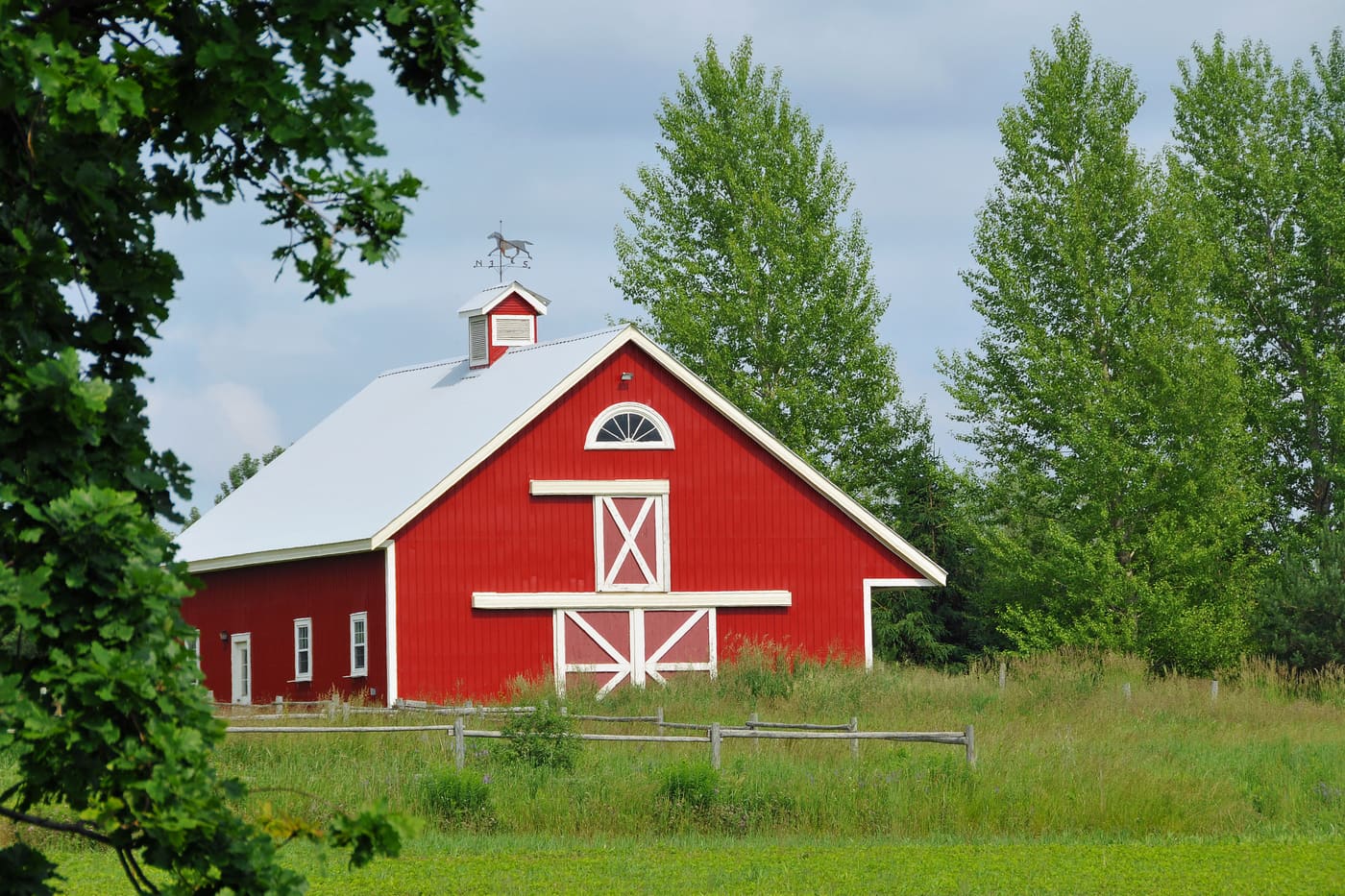
Annapolis Valley
Construction mortgages in Nova Scotia: how draws actually work
The money arrives in draws against work completed, not in one advance. How the draws, the 10% holdback and the conversion to a standard mortgage work, on a Nova Scotia example.
How does a construction mortgage work in Nova Scotia?
The lender approves a total from your land plus the build cost, then advances it in three or four draws as an appraiser confirms each stage. You pay interest only on what has been advanced, the last draw waits for the 10% builders’ lien holdback period, and the loan converts to a standard mortgage at completion.
The draw schedule, on a Nova Scotia example
A construction mortgage funds in stages against a house that does not exist yet, so the lender approves the whole budget up front and an appraiser confirms each stage before it advances.
Four draws on a $520,000 build
- Interest only on what has been advanced (steps 1–3)
- Final draw waits for the builders’ lien holdback (step 4)
- Land / start $78,000 15% of the budget; your own money goes in first
- Lock-up $208,000 40% cumulative; weather-tight
- Mechanical and drywall $338,000 65% cumulative; rough-ins inspected
- Completion $520,000 100%; occupancy permit, then conversion
Cumulative and illustrative; your lender sets the stages. The holdback is under the Nova Scotia Builders’ Lien Act, released after the lien period following completion.
| Draw | What must be complete | Cumulative | Advanced to date |
|---|---|---|---|
| Land / start | Lot purchased or owned, permits issued, foundation poured | 15% | $78,000 |
| Lock-up | Framing, roof, windows and exterior doors in; weather-tight | 40% | $208,000 |
| Mechanical and drywall | Rough plumbing, electrical and HVAC inspected; insulation and drywall complete | 65% | $338,000 |
| Completion | Occupancy permit, final inspection, well and septic sign-off, insurance converted | 100% | $520,000 |
Your own money goes in first: the down payment or lot equity is spent before the lender’s first advance. The builder is paid in arrears: each draw reimburses completed work, so the builder’s contract must match the lender’s stages.
A builder financing the build and selling you a finished home means a completion mortgage, which closes once like any purchase; own the lot and hire the builder and you need the progress-advance structure above.
Where building in Nova Scotia gets slower
Draw mortgages turn on appraisals, and appraisals turn on comparable sales. In Halifax Regional Municipality the comparables are plentiful and each draw inspection comes back quickly. Across Northern Nova Scotia, the Highland region and Cape Breton they are thinner, so build longer gaps between draws into the schedule you agree with the builder. On a rural lot add the well and septic to the critical path: the lender wants a potability test before the final advance, and outside HRM that takes longer to arrange. What a rural property needs to close →
Go deeper
The detail, if you want it
The builders’ lien holdback
Nova Scotia’s Builders’ Lien Act requires the owner to hold back 10% of the value of work and materials as security for unpaid subcontractors and suppliers, released after the lien period following completion expires with no liens registered; lenders build that into the final draw.
First-time owner-builders often miss it, which is why the last month of a build feels cash-starved; your lawyer handles the lien search and release.
What the lender needs, and why a draw is refused
Before the first advance:
- A signed fixed-price contract with a stage schedule, or for cost-plus builds a detailed budget with a contingency, commonly 10% or more.
- New-home warranty enrolment; most lenders require it on a contracted build.
- Plans, the building permit, and where relevant the on-site sewage (septic) approval from Nova Scotia Environment.
- The builder’s liability insurance, and course-of-construction insurance in the owner’s name.
A draw is refused when the stage is incomplete by the lender’s definition, the cost to complete exceeds the money left (usually change orders), a lien is registered, a permit or inspection is outstanding, or insurance has lapsed.
Nova Scotia specifics that stall the final draw: on an unserviced lot it waits for a well potability test and the septic installer’s certificate, so drill the well early; an oil tank needs its installation certificate and a wood stove a WETT inspection before the permanent insurance the lender needs to convert.
Progress inspections in Guysborough, Digby or Victoria counties take longer to schedule than in HRM; build a week into each request.
Interest-only, the conversion, and CMHC on a new build
At the final draw the loan converts to a standard mortgage: you choose a term and rate (some lenders let you hold one at the outset) and the amortization starts.
You were qualified for the full amount up front at the greater of the contract rate plus 2% and 5.25%, so the conversion is not a second approval unless something has changed.
CMHC Improvement funds a single advance where improvements are under 10% of the as-improved value, and progress advances above that. First-time buyers can use CMHC Home Start for a 30-year amortization on a newly built, never-occupied home.
Minimum down matches a purchase, 5% of the first $500,000 and 10% of the remainder (1–2 units), and the as-improved value must be below $1,500,000; Nova Scotia charges no provincial sales tax on the premium.
How it works
From first call to keys, in four steps
-
A 15-minute call
You say what you’re trying to do and roughly what you earn.
Riley tell you the price a lender will support, the cash you need to close, and what to fix first.
-
Documents and pre-approval
You send the short list through a secure upload link.
Riley package the file and come back with a pre-approval letter and a rate held 90 to 120 days.
-
Lenders, side by side
You read the comparison and pick.
Riley place one application with banks, credit unions and monolines, and show you every answer.
-
Approval, lawyer, keys
You sign with your own local lawyer.
Riley hold the lender, appraiser and lawyer to the closing date.
Why a broker
Licensed, independent, paid by the lender
- Licensed in Nova Scotia Associate broker 3001134, verifiable on the provincial register
- $0 broker fee On a standard residential mortgage the lender pays, not you
- Banks, credit unions, monolines One application, one credit check, placed with the lender that reads your file best
- Every part of the province Bedford office, remote process: Yarmouth to Sydney, the same four steps
Questions people ask
What is the builder’s lien holdback and why does it delay my last draw?
Under the Nova Scotia Builders’ Lien Act the owner must hold back 10% of the value of work done as security for subcontractors and suppliers until the lien period after completion has expired. Lenders respect it, so the final money is released after that period, not the day the house is finished.
Can I use my land as the down payment?
Yes. If you own the lot outright, its appraised value counts as equity: on a $520,000 total cost with a $100,000 lot owned clear, the lot is a 19% contribution before any cash. With a mortgage on the lot, the equity above that balance counts.
Do I need a licensed builder, or can I build it myself?
Both are financed, but differently. A contract with a warranty-enrolled builder is the easiest file. Self-builds are financed by fewer lenders and usually need a larger down payment, a detailed budget and evidence you can manage the trades; sweat equity is not cash.
What if the build runs over the interest-only period?
Most lenders allow 12 months of construction, some 18. Run long and you apply for an extension, usually granted with a progress report and updated cost to complete. Running out of money is the bigger risk, hence the contingency and the cost-to-complete check at every draw.

Still unsure? Ask me directly.
If your question isn't here, your situation is probably specific. Fifteen minutes on the phone beats reading another page, and nothing is pulled on your credit.
(902) 298-0218 · Monday to Friday, 8:00 am to 10:00 pm Atlantic
Building in Nova Scotia?
Send the lot, the budget and the builder, and you get back the draw structure a lender would use, the cash you need to start, and where the holdback will bite.
(902) 298-0218 · Monday to Friday, 8:00 am to 10:00 pm Atlantic