

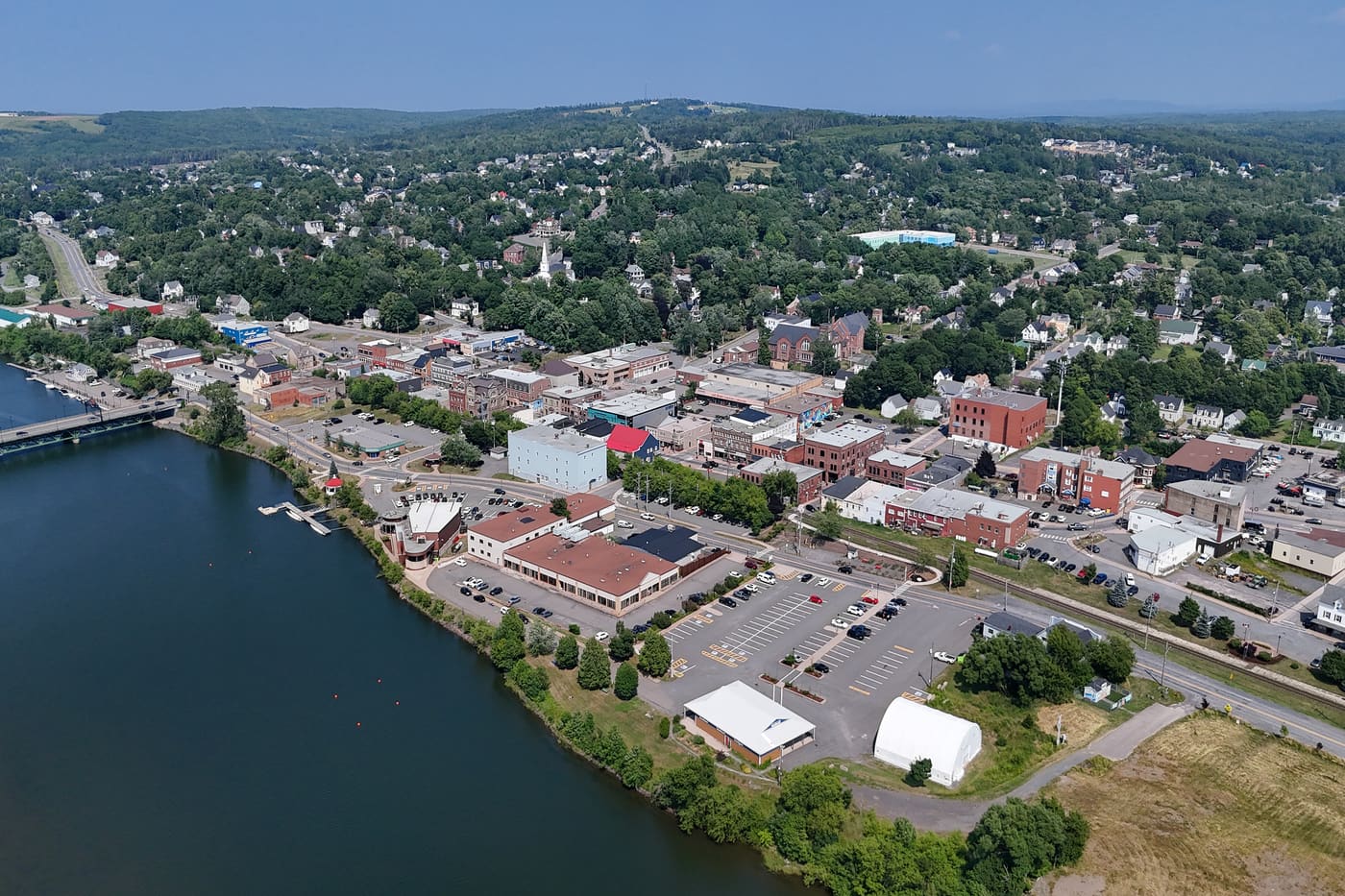
New Glasgow
B-lenders and alternative mortgage lenders in Nova Scotia
The tier between a bank and a private lender: regulated institutions that price a file for risk rather than declining it. Higher rate, a lender fee, a shorter term — and, done properly, a dated plan to leave.
What is a B-lender mortgage?
A mortgage from a regulated alternative lender — a trust company, a monoline's alternative arm, or a credit union outside federal regulation — that prices for risk instead of declining. It takes bruised credit, self-employed income that does not read on a return, higher debt ratios and properties a bank refuses, at a higher rate with a lender fee, usually on a one to three year term meant to be exited.
Who the alternative lenders actually are
"B-lender" is not a legal category, which is why no register of them exists. In practice a Nova Scotia file lands with one of four kinds of institution.
- Trust companies and alternative arms of the monolines. The largest part of the market: the same organisations behind many prime mortgages, running a separate, looser set of guidelines at higher pricing.
- Credit unions. Provincially regulated, so not bound by the federal qualifying rate on their own book, and often the most flexible option in the province — particularly on rural property and local self-employment.
- Specialist alternative lenders. Firms that write nothing but B files, usually the most accommodating on credit and the most expensive.
- Mortgage investment corporations at the top of their range. The boundary between B and private, and where the fee structure starts to look private.
None of them takes applications from the public: alternative lending in Canada is distributed through brokers, which is the practical reason a declined bank customer ends up talking to one.
A-lender, B-lender, private
| Comparison | B-lender | Private lender |
|---|---|---|
| What it is | A regulated institution with published guidelines | An individual, MIC or syndicate lending its own money |
| What it prices | You: credit, income, ratios, and the property | The property and the equity, largely regardless of you |
| Stress test | Applied, often at the contract rate plus a margin | Not applied |
| Credit | Lower accepted and priced accordingly | Largely irrelevant |
| Typical term | 1–3 years | 1–2 years, often interest-only |
| Cost | Above A pricing, plus a lender fee | Above B pricing, lender fee and normally a broker fee |
Most files a bank declines belong here rather than at a private lender, and the difference in cost over a two-year term is usually large. A broker who moves a declined file straight to private without testing the alternative market is skipping the cheaper answer. Private lending, and when it is genuinely the right tool →
The lenders your application actually goes to
A bank branch can offer you one lender’s products. These are the ones an application can be placed with instead — and the reason the answer to “can this be financed?” is more often yes.
Banks
Chartered banks and the broker channels they run. B2B Bank is a bank that lends only through brokers — you cannot walk into a branch and ask for it.
- BMO
- CIBC
- Desjardins
- National Bank
- RBC Royal Bank
- Scotiabank
- TD
- B2B Bank
Monoline and institutional lenders
Lenders that do mortgages and nothing else, plus insurers that lend directly. No branches, no chequing account to open, and the bulk of insured lending in the country.
- CMLS Financial
- First National Financial
- MCAP
- MERIX Financial
- Radius Financial
- RFA
- RMG Mortgages
- Strive Capital
- Highclere Capital
- Assumption Life
Alternative and B lenders
Where the income or the credit does not fit an A-lender policy: self-employed income that looks thin on paper, bruised credit, a short time in Canada, or a property an A-lender will not take.
- Equitable Bank
- Home Trust
- Haventree Bank
- WealthONE Bank of Canada
- Peoples Group
- Community Trust
- Indigo Blue
MIC and private lenders
Short-term, equity-led lending for a file that needs time before it can move back to an A or B lender. Five of these are Atlantic Canadian, which matters on rural and non-standard property.
- Firm Capital
- MCAN Financial
- Magenta Capital
- Capital Direct
- Alternative Financing Options
- Atlantic Signature Mortgage & Loan
- East Coast Private Lending
- Graysbrook Capital
Go deeper
The detail, if you want it
Which files land at a B-lender
- Bruised credit. A completed consumer proposal, a past collection, a stretch of late payments, or a score under the 600 an insured mortgage needs.
- Self-employed income written down by expenses. The returns say one thing and the business says another; a bank-statement program reads the deposits instead. How self-employed income is read →
- Debt ratios over the guideline. Housing costs above 39% of gross income or total debts above 44%, measured at the greater of the contract rate plus 2% and 5.25%.
- CRA arrears. An A-lender will not fund around them; several alternative lenders will pay them out of the advance.
- The property itself. Former rental conversions, mini-homes, large rural parcels, seasonal access, an unresolved oil tank or a failed water test. The three Nova Scotia property questions →
- Timing. A firm closing date that a bank's queue will not meet.
What it costs, and what to ask for in writing
No rate or fee percentage is published on this page, because both move weekly and depend on the file; a number here would be marketing rather than information. What does not move is the shape of the cost, and you are entitled to all of it in writing before you commit:
- The rate, materially above A-lender pricing, and the term it is fixed for.
- The lender fee, normally a percentage of the advance, deducted from the funds rather than paid up front.
- Any broker fee, disclosed in writing before any services are provided.
- The penalty to leave early, which on an alternative-lender term is often three months interest but is worth confirming.
- The renewal fee if you are still there at maturity — the cost of the exit not happening.
Ask for the total cost of borrowing as a dollar figure over the full term, then compare it against the cost of waiting a year. Sometimes waiting wins, and that is a legitimate answer.
What Nova Scotia regulation entitles you to
Under the Standards of Conduct for Mortgage Brokerages Regulations, any fee must be disclosed to you in writing before services are provided. Section 22 of the Standards of Conduct for Mortgage Brokerages Regulations: a brokerage must not charge or collect a fee from a borrower until the lender has confirmed funding in writing, the borrower has accepted the commitment in writing, and the borrower has a copy of the signed commitment
On a standard A-lender residential mortgage the fee to you is $0. The full fee and disclosure explainer →
The exit, which is the whole point
A B-lender mortgage is a repair job with a deadline. Before the file is placed, the route out is written down and dated, and the term is chosen to match it:
- Credit re-established. Two re-established trade lines paid on time, balances under half their limits, and the derogatory item ageing — typically 12 to 24 months.
- The return filed. A self-employed borrower becomes an A-lender file the moment two years of Notices of Assessment support the income.
- Arrears cleared. Paid out of the advance at funding, which is often the reason for the B mortgage in the first place.
- The property fixed. The oil tank replaced, the water test passed, the renovation finished and the value supported.
At maturity there is no penalty to move, so the plan is executed at renewal. If nothing on the list applies to your file, the honest conversation is a different one — and it is better had now than in two years. What to do when the bank says no →
Nova Scotia specifics
Two things make the alternative tier busier here than the national picture suggests. Credit unions hold a large share of Nova Scotia mortgages and are provincially regulated, so they sit partly outside the federal rules — useful at renewal and on unusual property, though it also means the straight-switch exemption does not apply when moving between a credit union and a bank.
The second is the housing stock. Older and more rural than the national average, it raises questions — oil tanks, dug wells, wood heat, leased pads — that decide insurability before anyone looks at your income.
Five or more units, land, or a project rather than a home is commercial financing and goes through Indi Mortgage Commercial Division.
How it works
From first call to keys, in four steps
-
A 15-minute call
You say what you’re trying to do and roughly what you earn.
Riley tell you the price a lender will support, the cash you need to close, and what to fix first.
-
Documents and pre-approval
You send the short list through a secure upload link.
Riley package the file and come back with a pre-approval letter and a rate held 90 to 120 days.
-
Lenders, side by side
You read the comparison and pick.
Riley place one application with banks, credit unions and monolines, and show you every answer.
-
Approval, lawyer, keys
You sign with your own local lawyer.
Riley hold the lender, appraiser and lawyer to the closing date.
Why a broker
Licensed, independent, paid by the lender
- Licensed in Nova Scotia Associate broker 3001134, verifiable on the provincial register
- $0 broker fee On a standard residential mortgage the lender pays, not you
- Banks, credit unions, monolines One application, one credit check, placed with the lender that reads your file best
- Every part of the province Bedford office, remote process: Yarmouth to Sydney, the same four steps
Questions people ask
What is a B-lender mortgage?
A mortgage from a regulated alternative lender — a trust company, the alternative arm of a monoline, or a credit union outside federal regulation — that prices for risk instead of declining it. B-lenders take bruised credit, self-employed income that does not read on a tax return, higher debt ratios and properties a bank will not take, at a higher rate and usually with a lender fee, normally on a shorter term meant to be exited.
Is a B-lender the same as a private lender?
No. A B-lender is an institution, regulated, with published guidelines, underwriting and audited files; a private lender is an individual, mortgage investment corporation or syndicate lending its own money against the property. B pricing sits between an A-lender and a private lender, and most files a bank declines belong at a B-lender rather than a private one.
What rates do B-lenders charge in Nova Scotia?
Materially above A-lender pricing, and the spread moves week to week with the file, the loan-to-value and the lender, so any number published on a website is out of date or marketing. What is stable is the shape: a higher rate, a lender fee taken from the advance, a shorter term, and a total cost you should ask for as a dollar figure over the full term before you commit.
Do B-lenders charge a fee?
Usually a lender fee, deducted from the advance rather than paid up front, and sometimes a broker fee as well. Under Nova Scotia regulation any fee to you must be disclosed in writing before any services are provided, and cannot be collected until the lender has confirmed funding in writing and you have accepted the commitment.
How long do I have to stay with a B-lender?
Usually one to three years, and staying longer is the failure case rather than the plan. The term is chosen to cover the time the file needs to heal — a collection ageing, a tax return filed, balances coming down — so that the mortgage can move to an A-lender at renewal, where there is no penalty to leave.
Can I get a B-lender mortgage after a consumer proposal?
Often yes, and sooner than people expect. Alternative lenders look at how long ago the proposal was completed, whether credit has been re-established since, and how much down payment or equity there is. A completed proposal with two re-established trade lines and a reasonable down payment is a file the B tier is built for.

Still unsure? Ask me directly.
If your question isn't here, your situation is probably specific. Fifteen minutes on the phone beats reading another page, and nothing is pulled on your credit.
(902) 298-0218 · Monday to Friday, 9:00 am to 5:00 pm Atlantic
Sent. Thank you.
Your details went straight to Riley. He replies within one business day, usually sooner, by phone or email.
Need it faster? Call (902) 298-0218, Monday to Friday, 9:00 am to 5:00 pm Atlantic.
Most declined files are B-lender files, not private ones
Send what the lender told you. Within a business day you get back which tier the file actually belongs in, what it would cost as a dollar figure, and the dated route back to an A-lender.
(902) 298-0218 · Monday to Friday, 9:00 am to 5:00 pm Atlantic