

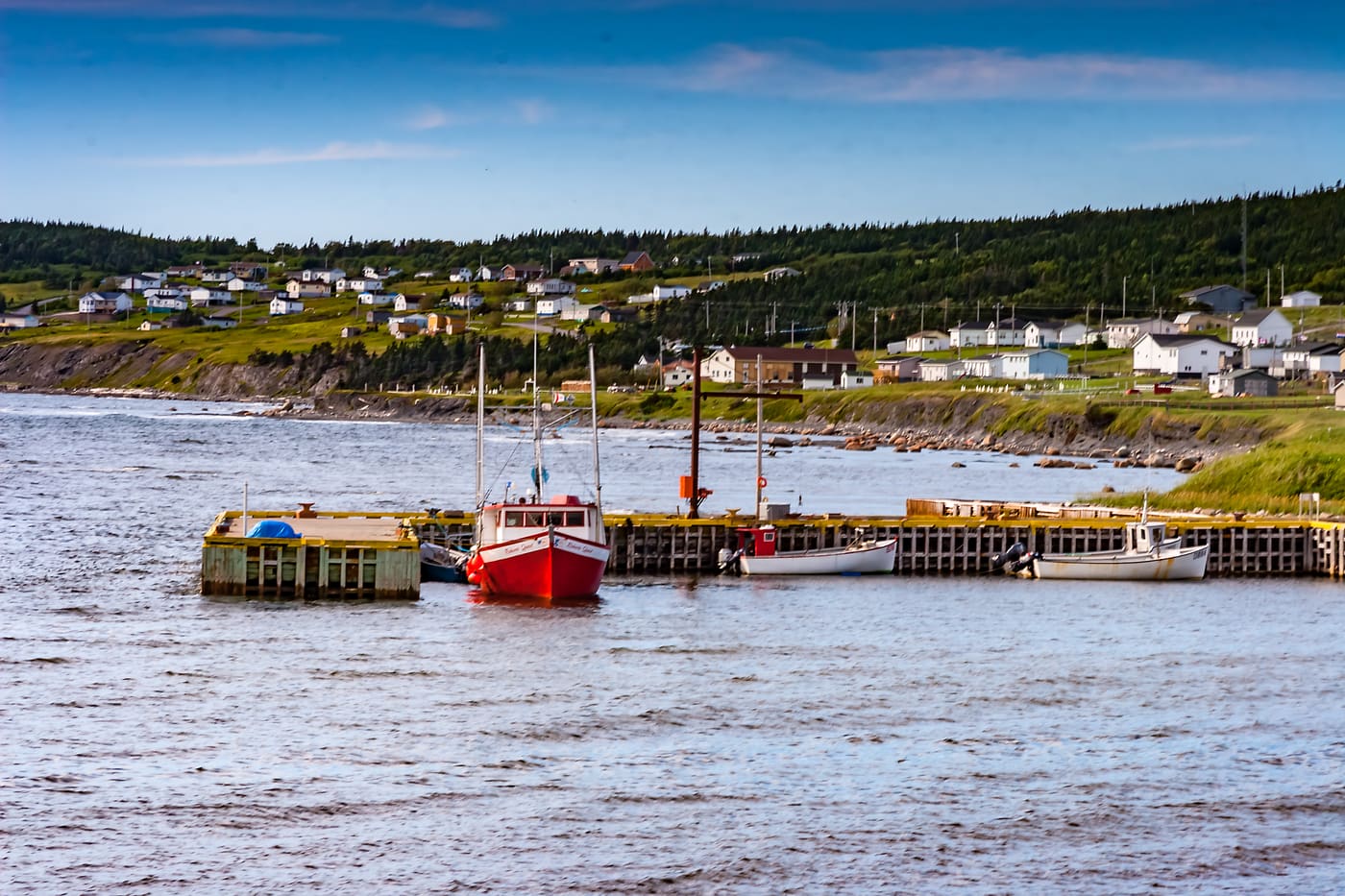
North Sydney, Cape Breton
Purchase mortgages in Nova Scotia: what it costs and how you qualify
The down payment, the CMHC premium, the deed transfer tax and the cash you need on closing day, worked on August 2026 Nova Scotia prices. Send a listing and get the same figures for that house, in writing.
How much do I need to buy a home in Nova Scotia?
At the August 2026 Nova Scotia average price of $467,585, the minimum down payment is 5%, or $23,379. Add $7,014 deed transfer tax at Halifax’s 1.5% rate and roughly $1,625 in legal, recording and title costs: about $32,018 cash to close. The CMHC premium is added to the mortgage, not paid in cash.
Minimum down payment in Nova Scotia, by price
On an insured mortgage the rule is 5% of the first $500,000 and 10% of the remainder (1–2 units). The premium is a percentage of the loan and is financed into it; the deed transfer tax is a percentage of the price and is paid in cash, at the 1.5% charged in Halifax Regional Municipality, CBRM and most of the province; Pictou and Yarmouth counties charge 1.0%.
| Purchase price | Minimum down | Mortgage | Premium (financed) | Deed transfer tax (cash) |
|---|---|---|---|---|
| $300,000 | $15,000 (5%) | $285,000 | $11,400 | $4,500 |
| $400,000 | $20,000 (5%) | $380,000 | $15,200 | $6,000 |
| $467,585 (NS average) | $23,379 (5%) | $444,206 | $17,768 | $7,014 |
| $600,000 | $35,000 (5.83%) | $565,000 | $22,600 | $9,000 |
| $800,000 | $55,000 (6.88%) | $745,000 | $29,800 | $12,000 |
| $1,000,000 | $75,000 (7.50%) | $925,000 | $37,000 | $15,000 |
The premium band follows the loan-to-value: 10% down drops it to 3.1% and 15% down to 2.8%. A down payment that is borrowed rather than saved or gifted is “non-traditional” and carries 4.5% at 95% financing. First-time buyers short of the 5% can look at the province’s Down Payment Assistance Program.
Cash to close on the August 2026 Nova Scotia average
Cash needed on closing day for a $467,585 home with the minimum 5% down
- $23,379Minimum down payment5% of the first $500,000 and 10% of the remainder (1–2 units)
- $7,014Deed transfer taxHalifax Regional Municipality, 1.5% of the price
- $1,625Legal, recording and titleTypical 2026 figures; confirm with your lawyer
- $17,768CMHC premium, financed4% of the mortgage, added to the balance rather than paid in cash
Nova Scotia Association of REALTORS® / CREA monthly statistics, August 2026; CMHC premium schedule; Nova Scotia municipal deed transfer tax schedule, July 2026. Legal, recording and title insurance figures are typical ranges observed in Nova Scotia in 2026; confirm with your lawyer.
Go deeper
The detail, if you want it
Cash to close on the provincial average
What the $467,585 example needs in the bank on closing day: $23,379 down, $7,014 deed transfer tax, legal fees at the top of the $850–$1,000 range, two $100 recording fees (deed and mortgage), the $125 HRM tax certificate and title insurance under $300: $32,018. The $17,768 premium is added to the mortgage; the appraisal and home inspection are paid earlier, during the financing condition. Run it on your own price →
Legal, recording and title insurance figures are typical ranges observed in Nova Scotia in 2026; confirm with your lawyer. Lenders want the closing costs in your account at approval, on top of the down payment.
2% down payment in Nova Scotia: the First-time Homebuyers Program
A first-time buyer can put 2–4% down through the province’s Nova Scotia First-time Homebuyers Program, launched February 3, 2026. It is delivered by Atlantic Central and participating Nova Scotia credit unions, not by banks or brokers. There is no mortgage insurance premium: a provincial guarantee stands in for it.
The limits: household income of $200,000 or less, a credit score of 630 or higher, no home owned in the last four years, and a price up to $570,000 in HRM and East Hants or $500,000 elsewhere. The rate is capped at prime + 2%. On a $400,000 home, 2% down is $8,000 against $20,000 at the standard 5%. How the 2% down pilot works → · Province of Nova Scotia →
How to get a mortgage in Nova Scotia: insured or uninsured, the stress test and the two ratios
Less than 20% down means the mortgage must be insured by CMHC, Sagen or Canada Guaranty and the price must be under $1,500,000. Insured mortgages get the lowest rates, under the insurer’s rules: minimum credit score 600, 25-year amortization, GDS 39% and TDS 44%.
With 20% or more down, or a price at or above $1,500,000, the mortgage is uninsured: no premium, amortization to 30 years at most lenders, rules that vary by lender and rates usually slightly higher.
Every federally regulated lender qualifies you at the greater of the contract rate plus 2% and 5.25%, whatever rate you sign at, so your maximum price is set by the qualifying rate. Work out the price your income supports → · How a pre-approval is done properly →
GDS is the share of gross income going to the mortgage payment at the stress-test rate, property taxes, heat and half of any condo fees. TDS adds every other monthly obligation, and it is where most Nova Scotia files get tight: a $600 car payment costs real borrowing power, and paying off a small loan before applying is usually the cheapest fix.
What a Nova Scotia house needs to close
The financing condition, typically five to ten business days, turns the pre-approval into a firm commitment on this house: the lender approves the property on an appraisal, issues a written commitment you sign back, and needs an insurance binder naming it as mortgagee. A Nova Scotia lawyer then searches title, registers the deed and mortgage and remits the deed transfer tax.
Much of the housing stock is older and rural; settle these before the appraisal, because no insurance binder means no closing.
- Oil tanks. Insurers set age limits and want the tank tag and installation date; an older or unlabelled tank can make the house uninsurable until replaced.
- Wood stoves and fireplaces. Insurers typically require a WETT inspection report; ask the seller for one, or budget for it.
- Well and septic. Outside municipal services the lender wants a potability test and evidence the septic works; some reduce loan-to-value on large acreage or a dug well.
- Older wiring. Knob-and-tube, aluminum and 60-amp service: some insurers decline, others want an electrician’s letter or a holdback.
- Leased heat pumps and solar are a registered interest on title the lawyer has to deal with.
If a house has a wood stove, an oil tank and a well, tell Riley when you book the viewing, not when you write the offer; the insurance quote and inspections can start the same day.
How it works
From first call to keys, in four steps
-
A 15-minute call
You say what you’re trying to do and roughly what you earn.
Riley tell you the price a lender will support, the cash you need to close, and what to fix first.
-
Documents and pre-approval
You send the short list through a secure upload link.
Riley package the file and come back with a pre-approval letter and a rate held 90 to 120 days.
-
Lenders, side by side
You read the comparison and pick.
Riley place one application with banks, credit unions and monolines, and show you every answer.
-
Approval, lawyer, keys
You sign with your own local lawyer.
Riley hold the lender, appraiser and lawyer to the closing date.
Why a broker
Licensed, independent, paid by the lender
- Licensed in Nova Scotia Associate broker 3001134, verifiable on the provincial register
- $0 broker fee On a standard residential mortgage the lender pays, not you
- Banks, credit unions, monolines One application, one credit check, placed with the lender that reads your file best
- Every part of the province Bedford office, remote process: Yarmouth to Sydney, the same four steps
Questions people ask
How much do I need for a down payment in Nova Scotia?
At least 5% of the first $500,000 and 10% of anything above that, if the mortgage is insured. On the August 2026 provincial average of $467,585 that is $23,379. Above $1,500,000 the mortgage cannot be insured, so 20% down is the minimum.
What closing costs should I budget for in Nova Scotia?
Deed transfer tax of 1.0% to 1.5% by municipality, legal fees of roughly $850 to $1,000, recording fees of $100 per document, a $125 tax certificate in HRM, and title insurance usually under $300 on homes under $500,000, plus an appraisal and a home inspection.
Should I get pre-approved before I start looking at houses?
Yes. Most Nova Scotia listing agents ask whether a buyer is pre-approved before presenting an offer, and a pre-approval tells you the maximum price before you fall for a house above it. It takes one to three business days once documents are in, holds a rate for typically 90 to 120 days, and costs nothing.
Can I get a 30-year amortization in Nova Scotia?
On an insured mortgage, a 30-year amortization is available to first-time buyers and to anyone buying a newly built home under CMHC’s Home Start program; otherwise insured mortgages cap at 25 years. Uninsured mortgages with 20% or more down can go to 30 years at most lenders.

Still unsure? Ask me directly.
If your question isn't here, your situation is probably specific. Fifteen minutes on the phone beats reading another page, and nothing is pulled on your credit.
(902) 298-0218 · Monday to Friday, 8:00 am to 10:00 pm Atlantic
Want the numbers for a specific house?
Send the listing and you get back the down payment options, the premium, the deed transfer tax for that municipality and a cash-to-close figure in writing, within a business day.
(902) 298-0218 · Monday to Friday, 8:00 am to 10:00 pm Atlantic