

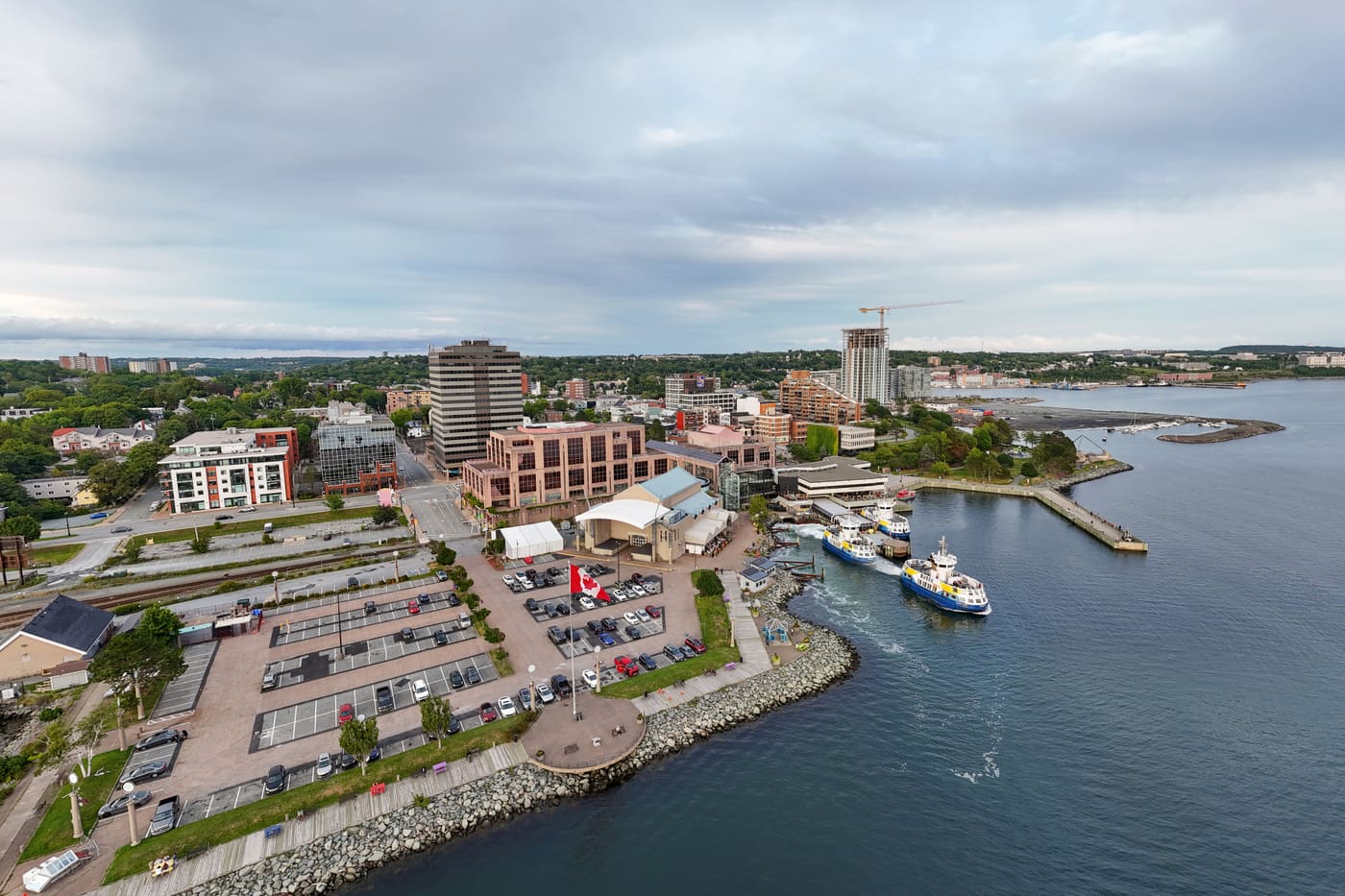
Dartmouth
Nova Scotia Down Payment Assistance Program (DPAP)
The province’s loan toward a first-time home buyer down payment in Nova Scotia: who qualifies, how much it lends, what it costs each month, how to apply, and how it fits with your mortgage.
What is the Nova Scotia Down Payment Assistance Program?
A provincial loan of 5% of the purchase price for a first-time buyer’s down payment, interest-free and repaid over 10 years in 120 monthly payments. It is a loan, not a grant, secured by a second mortgage. Household income must be under $145,000, and the price under a regional cap: $570,000 in HRM and East Hants, $375,000 or $300,000 elsewhere.
DPAP calculator: your price limit, loan and repayment
Pick the municipality the home is in, not where you live now; the province decides the price cap by the property’s location. The municipality also sets the deed transfer tax you pay on closing.
The premium shows CMHC’s 4% standard rate and its 4.5% borrowed-down-payment rate; the insurer confirms which applies to a DPAP down payment on your file.
Mortgage payment at the chartered-bank prime rate, Bank of Canada, 2026-09-30 (4.45%), with the premium added; your rate will differ. This calculator is an estimate, not an approval, a commitment or lending advice. It checks the price cap and income limit only. The province also checks credit (650+ for everyone on the deed), first-time buyer status, residency, that you could not pay the 5% yourself, and your documents, and the lender separately approves the mortgage.
Want these numbers run on a real listing, with your income and the right lender?
Book a free 15-minute callDown payment assistance in Nova Scotia: price limits by region
Three price caps, each with a matching maximum loan. A home priced above the cap is not eligible at all; the program does not lend 5% of the cap toward a dearer house. The caps have not changed in 2026.
| Where the home is | Maximum price | Maximum loan | Monthly repayment at the maximum |
|---|---|---|---|
| HRM and East Hants Halifax Regional Municipality and the Municipality of East Hants | $570,000 | $28,500 | $238 |
| Valley, South Shore and West Hants West Hants, Kings, Annapolis, Digby, Lunenburg, Queens and Shelburne | $375,000 | $18,750 | $156 |
| Yarmouth, Northern and Eastern Yarmouth, Cumberland, Colchester, Pictou, Antigonish, Guysborough, Inverness, Richmond, Victoria and Cape Breton | $300,000 | $15,000 | $125 |
Above $500,000 you add some of your own money. Only possible in HRM and East Hants. The federal minimum down payment is 5% of the first $500,000 and 10% of the rest, but DPAP lends 5% of the whole price, so you cover the other 5% of the part over $500,000. At the $570,000 cap the minimum down is $32,000: $28,500 from DPAP and $3,500 from you.
First-time home buyer assistance in Halifax, Dartmouth and Bedford
HRM has the highest cap, $570,000, and the largest loan, $28,500. Against the August 2026 Halifax-Dartmouth average of $592,675, the cap sits $22,675 below it, so DPAP works below the typical HRM price, and above $500,000 you add a little of your own. East Hants shares the same cap. NSAR publishes prices by region, not by neighbourhood, so ask for the numbers on the street you are looking at. Halifax · Dartmouth · Bedford · Sackville · Elmsdale
Worked examples at five prices
Each example uses only the regions where that price is under the cap. The mortgage payment uses the chartered-bank prime rate, Bank of Canada, 2026-09-30 (4.45%) over 25 years, with the 4% premium added.
| Price | Eligible in | DPAP loan | Your own down payment | Mortgage before insurance | Premium 4% / 4.5% | Mortgage payment | DPAP monthly |
|---|---|---|---|---|---|---|---|
| $250,000 | All regions | $12,500 | $0 | $237,500 | $9,500 / $10,688 | $1,360 | $104 |
| $300,000 | All regions | $15,000 | $0 | $285,000 | $11,400 / $12,825 | $1,632 | $125 |
| $350,000 | HRM, East Hants, Valley, South Shore | $17,500 | $0 | $332,500 | $13,300 / $14,963 | $1,904 | $146 |
| $450,000 | HRM and East Hants | $22,500 | $0 | $427,500 | $17,100 / $19,238 | $2,448 | $188 |
| $550,000 | HRM and East Hants | $27,500 | $2,500 | $520,000 | $20,800 / $23,400 | $2,978 | $229 |
- DPAP loan, interest-free $17,500
- First mortgage from your lender $332,500
On top of the $332,500 mortgage, the 4% insurance premium of $13,300 is added to the balance. The $17,500 DPAP loan costs $146 a month for 10 years. Deed transfer tax of about $5,250 and legal costs are still paid in cash.
Read across the $350,000 row: the province lends the whole $17,500 down payment, the lender lends $332,500 plus the premium, and you carry two payments, about $1,904 on the mortgage and $146 to the province. You still bring roughly $6,750 for deed transfer tax and legal costs. At $550,000 (HRM and East Hants only) you also add $2,500 of your own toward the down payment.
Is DPAP a loan or a grant?
A loan: DPAP is a Nova Scotia down payment loan, not a gift. The province lends you the down payment and you pay back exactly what you borrowed: no interest, no fees to apply, 120 equal monthly payments that start one month after the closing date. It is registered as a second mortgage on the home, behind your lender’s first mortgage.
The guide is precise about the interest: none is charged if you continue to live in the home. The money can only go toward the down payment, never closing costs, and the province is lending it because you could not otherwise make the 5%.
DPAP eligibility in Nova Scotia: who qualifies
The household, plus every person who will be on the deed, must meet all of these:
- Household income under $145,000 before tax. Anyone living in the home but not on the deed still declares their income.
- A credit score of 650 or higher for each person on the deed. The province pulls an Equifax report itself.
- A first-time home buyer, as the program defines it (below).
- A Canadian citizen or permanent resident who lives, or intends to live, in Nova Scotia full time.
- Unable to pay the 5% without the program. You swear to this in the affidavit; DPAP is meant for people without the savings.
- Able to pay the closing costs yourself, and to prove it.
- Pre-approved for an insured mortgage by a National Housing Act approved lender.
What counts as a first-time buyer for DPAP
Each applicant must meet one of three tests. A first-time buyer is someone who:
- has never owned a home by purchase, inheritance or gift.
- has not lived in a home owned by themselves or their current spouse, common-law partner or cohabitant in the last four years.
- previously owned a home but has been through the breakdown of a marriage or common-law partnership.
The second test is the one people miss: if you owned a home before but have not lived in one owned by you or your current partner in the last four years, you can qualify again.
Nova Scotia residency
The current guide asks that you live or intend to live in Nova Scotia full time. It sets no minimum period, so a 12-month waiting rule you may read elsewhere is not in today’s program documents. Newcomers need permanent resident status; a work permit is not enough for DPAP. New to Canada mortgages →
Couples, friends and family buying together
An applicant is anyone on the deed, even if they are not on the first mortgage. Married and common-law partners (12 months living together) must be on the deed, on the application and on the loan documents. Friends or relatives buying together can apply too; each must qualify.
Which homes qualify
- Types: detached, semi-detached, row house, condominium, or a mobile home permanently attached to land you own.
- Your principal residence from the day you move in. Rentals, cottages and seasonal homes are out, as is anything commercial.
- In good condition and insurable for fire. An older oil tank or unlabelled wiring can hold this up. Oil tanks, wells and wood heat →
- A mobile or mini-home only if it is permanently attached to land you own. Mini-home mortgages →
- Purchase Plus Improvements is eligible if the price plus the renovation stays under the cap.
- Not already bought. A home you purchased before the program approved you does not qualify.
How to apply for DPAP in Nova Scotia, step by step
The province needs a signed Agreement of Purchase and Sale, so the application comes after your offer is accepted, not before you shop. That is the single biggest timing difference from most explanations of the program.
- Get an insured mortgage pre-approval. From a National Housing Act approved lender, for a price under your region’s cap. A broker arranges it from the lender; the province does not accept a broker’s own letter.
- Find a home and sign an Agreement of Purchase and Sale. Give yourself a financing condition long enough for the province: you must apply at least 3 weeks before it expires. A home bought before program approval is not eligible.
- Send the application to the regional office. The form, the sworn affidavit and the supporting documents, by mail or in person at the office for the area the home is in. Halifax and Hants County need an appointment: 1-844-424-5110.
- Wait for the review. Complete applications are handled first come, first served; staff respond within 10 business days. Incomplete ones are not accepted.
- Conditional approval goes to your lender. Give the approval letter to the lender, and send the lender’s commitment letter and your fire insurance to the housing caseworker.
- Your lawyer signs the second mortgage. The province emails the documents to your lawyer, and about 10 business days before closing it sends the loan to the lawyer’s trust account.
- Repayment starts. The first of 120 equal monthly payments comes out one month after the closing date, by pre-authorized debit.
Tell your realtor before you write the offer. A typical financing condition in Nova Scotia is a week or two. DPAP needs your application in at least 3 weeks before that deadline, and the review takes up to 10 business days. Write a financing condition long enough to fit both, and have your documents gathered before you go looking.
Documents the province asks for
- The completed application form and the sworn affidavit that you have not owned a home, signed before a lawyer, notary, justice of the peace or commissioner of oaths.
- Last year’s CRA tax slips and Notice of Assessment, or a CRA Proof of Income Statement, for each applicant.
- Self-employed, seasonal or commission income: three years of Notices of Assessment and the latest Statement of Business Activities.
- Recent pay stubs and a letter of employment with your hire date, position, income and status (full time, part time, seasonal, term).
- The lender’s pre-approval or mortgage commitment. A letter from a mortgage broker is not accepted.
- The Agreement of Purchase and Sale and any amendments.
- The Pre-Authorized Payment form with a void cheque or bank stamp.
- Your lawyer’s name, address, phone and email.
- Proof you can pay the closing costs.
- Government ID, your permanent resident card if applicable, and your Canada Child Benefit statement if you receive it.
Most of this overlaps with what the lender needs. The full mortgage documents checklist →
Where to send it: regional housing offices
Apply to the office for the area the home is in. Toll-free for every office: 1-844-424-5110.
| Office | Covers | Address | Phone |
|---|---|---|---|
| Central (appointment required) | HRM and Hants County | 3770 Kempt Road, Suite 3, Halifax | 902-424-5110 |
| Western | Annapolis Valley and South Shore | 101 Magee Drive, Middleton | 902-825-3481 |
| Northern | Cumberland, Colchester, Pictou, Antigonish, Guysborough | 7 Campbell’s Lane, New Glasgow | 902-755-5065 |
| Eastern | Cape Breton Island | 360 Prince Street, Suite 22, Sydney | 902-563-2120 |
When to get mortgage pre-approved
First, before you look at houses. The pre-approval tells you the price you can carry once the DPAP payment is counted, and DPAP will not consider an application without one. It must be for an insured mortgage, from an NHA-approved lender.
That last part matters if you use a broker: the province does not accept a broker’s own letter. We submit your file to the lender, and the pre-approval, and later the commitment after your offer is accepted, come from the lender itself. Those are the documents the province asks for. How a pre-approval works →
Not sure if you qualify for Nova Scotia’s Down Payment Assistance Program?
Book a free 15-minute call with Riley to go over:
- Whether you qualify
- How much DPAP assistance you may receive
- What purchase price you could qualify for
- How DPAP would work alongside your mortgage
- Which lenders may suit your situation
How DPAP works with your insured mortgage
Most DPAP buyers put the program’s 5% down and nothing else, so the first mortgage is 95% of the price. Anything under 20% down needs mortgage default insurance from CMHC, Sagen or Canada Guaranty, so every DPAP file is an insured mortgage, and the province requires that.
The insurance premium
At 95% of the price you are in the top tier of the premium schedule. CMHC charges 4% of the mortgage there with a traditional down payment, and 4.5% when the down payment is borrowed. CMHC describes borrowed down payments as arm’s-length funds such as unsecured loans and lines of credit; DPAP is a secured provincial second mortgage, which does not fit that description neatly. Which rate applies is settled by the insurer on your file, so the calculator shows both. On $350,000 the difference is $1,663, added to the mortgage either way, not paid in cash. Nova Scotia charges no sales tax on the premium.
The stress test and your debt ratios
You qualify for the first mortgage at the greater of the contract rate plus 2% and 5.25%, like every insured buyer, and the DPAP payment counts as a debt. Lenders cap total debt payments, housing included, at 44% of gross income. A $146 DPAP payment reduces the mortgage you can carry by roughly what a $146 car payment would. See what your income qualifies for →
A 30-year amortization
First-time buyers can take a 30-year amortization on an insured mortgage instead of 25, which lowers the payment and can offset the DPAP payment in the ratios. CMHC adds a premium surcharge for it; the lender quotes it on your file. Down payment and premium calculator →
Lenders
Any NHA-approved lender can be the first-mortgage lender. In practice the work is in timing: the lender’s approval and the province’s approval have to land inside the same financing condition, and the lender’s instructions need to allow the second mortgage. A broker coordinates both. Mortgage lenders in Nova Scotia →
Closing day, and the costs DPAP does not cover
About 10 business days before closing, the province sends the loan electronically to your lawyer, who pays it to the seller with the lender’s mortgage funds. You sign both mortgages with the lawyer beforehand. Tell the program staff straight away if your closing date, price or mortgage changes, or closing can slip.
DPAP cannot be used for closing costs, and the province checks you can pay them. Budget, in cash:
- Deed transfer tax: 1.0% to 1.5% of the price depending on the municipality; $5,250 on $350,000 in HRM. Rate for your municipality →
- Legal fees: about $850 to $1,000 plus disbursements and HST.
- Recording fees, title insurance, tax and fuel adjustments, and a home inspection.
- Your share of the down payment on any price above $500,000.
Savings in a First Home Savings Account or RRSP (through the Home Buyers’ Plan) can pay these. Keep in mind the province’s needs test: you swear you could not pay the 5% yourself, so savings large enough to cover it can count against the application. Ask before you move money around. What closing actually costs in Nova Scotia → · Closing cost calculator →
After you buy: repaying, paying early, selling
Repayment
120 equal payments, one a month, by pre-authorized debit from the account you name, starting one month after the closing date. The province collects monthly only. The calculator’s other frequencies show the same cost per paycheque for budgeting.
Can you pay DPAP off early?
The province’s guide and form do not set out a prepayment rule either way. Because the loan is interest-free, paying it early saves no interest; its benefit is clearing the second mortgage and the monthly payment. If you want to, ask the regional office for a payout statement before you count on it.
What happens when you sell or move out
The loan is due when the home is sold, and the lawyer pays out the balance from the sale proceeds before you receive yours. The guide lists these as breaches of the program terms, any of which lets the province recover the loan, including by foreclosure:
- You move out and no longer live in the home.
- You sell the home before the loan is repaid.
- You miss loan payments for 90 days or more.
- Your first-mortgage lender starts foreclosure.
- Property taxes go unpaid with no payment plan.
- Fire insurance is cancelled and not replaced.
A DPAP home becomes eligible for the province’s Housing Repair Program 15 years after purchase, and for its Accessible Housing Program after one year, if you meet those programs’ rules.
DPAP or the 2% First-time Homebuyers Program?
Since February 2026 Nova Scotia has a second, separate program. The province says the two are run separately; they cannot be stacked.
| Down Payment Assistance Program | First-time Homebuyers Program (pilot) | |
|---|---|---|
| What it is | A 5% interest-free loan for the down payment | A mortgage with 2–4% down |
| Run by | The province | Atlantic Central and participating Nova Scotia credit unions |
| Household income | Under $145,000 | $200,000 or less |
| Credit score | 650+ | 630+ |
| Price cap | $570,000 / $375,000 / $300,000 | $570,000 HRM and East Hants, $500,000 elsewhere |
| Mortgage insurance | Required, premium added to the mortgage | None; a provincial guarantee replaces it |
| Extra monthly payment | Yes, the DPAP repayment | No |
Outside HRM the 2% program’s cap is higher, so a buyer in the Valley at $450,000 only has that route. Every program compared → · Which one you fit →
Pros and cons of DPAP
In its favour
- Buy now instead of saving for years: the whole 5% minimum is covered up to $500,000.
- Interest-free money, which no lender offers.
- Works with any NHA-approved lender, not just credit unions.
- No application fee, and a published 10-business-day review.
Against it
- A second monthly payment for 10 years, $125 to $238 at the maximums.
- The payment lowers the mortgage you qualify for.
- Price caps below the regional average in much of the province.
- The highest insurance tier, possibly at the borrowed-funds rate.
- A second mortgage on title, due if you sell or move out.
- A tight timeline after your offer is accepted.
Common DPAP mistakes
- Applying before you have a house. The province needs the signed Agreement of Purchase and Sale; get pre-approved first, apply once the offer is accepted.
- A financing condition that is too short. Three weeks’ notice is the province’s minimum, so a one-week condition cannot work.
- Sending a broker’s letter instead of the lender’s pre-approval. It is not accepted; the lender’s document is.
- Shopping above the cap. One dollar over and the program does not apply. Check the cap for the municipality the house is in.
- Forgetting closing costs. DPAP covers the down payment only; deed transfer tax and legal fees are cash.
- Leaving someone off. A spouse or common-law partner must be on the deed and the application, and anyone else in the home declares their income.
- Assuming a past owner can never qualify. Four years without living in a home you or your partner owned, or a relationship breakdown, can make you a first-time buyer again.
- Not budgeting the second payment. It starts a month after closing, beside the mortgage, property tax and heat.
Rather have someone check your file against all of this? It takes fifteen minutes.
Book a free call with RileyOfficial Government of Nova Scotia resources
Program rules can change without notice; the province’s own documents are the final word. Figures on this page were checked against them on .
- Apply for a loan to help with a down payment on your first home: Down Payment Assistance Program (novascotia.ca)
- Down Payment Assistance Program Guide, December 2025 (PDF)
- DPAP application form and affidavit (PDF)
- Client Pre-Authorized Payment form (PDF)
- Regional DPAP office contacts, Department of Growth, Development and Defence Industries
- First-time Homebuyers Program (2% down pilot)
- CMHC list of NHA-approved lenders and CMHC premium schedule
Changes
- : page rebuilt and every figure re-verified against the province’s page, the December 2025 guide and the application form. No change to the loan, income limit or price caps in 2026.

Written by Riley Oickle
Associate Mortgage Broker, Nova Scotia licence 2025-3001134, with Indi, The Independent Mortgage Company Ltd. Every figure on this page links to the government or regulator page it came from.
Why a broker
Licensed, independent, paid by the lender
- Licensed in Nova Scotia Associate broker 3001134, verifiable on the provincial register
- $0 broker fee On a standard residential mortgage the lender pays, not you
- Banks, credit unions, monolines One application, one credit check, placed with the lender that reads your file best
- Every part of the province Bedford office, remote process: Yarmouth to Sydney, the same four steps
DPAP questions people ask
What is the Nova Scotia Down Payment Assistance Program?
A provincial loan of 5% of the purchase price toward a first-time buyer’s down payment: interest-free, repaid in 120 monthly payments over 10 years, and secured by a second mortgage. Household income must be under $145,000, everyone on the deed needs a 650+ credit score, and the price must be under a regional cap of $300,000, $375,000 or $570,000.
Is DPAP a grant or a loan?
A loan. You repay every dollar, $238 a month at the Halifax maximum of $28,500, and lenders count that payment in your debt ratios. It is interest-free as long as you keep living in the home.
How do I apply for DPAP in Nova Scotia?
Get an insured mortgage pre-approval, find a home and sign an Agreement of Purchase and Sale, then mail or drop off the application at the regional housing office for the area the home is in, at least 3 weeks before your financing deadline. Halifax and Hants County applications need an appointment, booked at 1-844-424-5110. Staff respond within 10 business days of a complete application.
Can a mortgage broker’s pre-approval be used for DPAP?
Not a broker’s own letter: the province wants a pre-approval or mortgage commitment issued by a National Housing Act approved lender. A broker arranges that document from the lender, and once you have an accepted offer the lender’s commitment letter is what the province asks for next.
What happens to DPAP if I sell or move out?
Selling before the 10-year loan is repaid, or moving out, puts the loan in breach of its terms, so the balance is repaid from the sale proceeds on closing; it is registered on title, so the lawyer pays it out. Missing payments for 90 days, unpaid property tax or cancelled fire insurance are also breaches.
Still unsure? Ask me directly.
If your question isn't here, your situation is probably specific. Fifteen minutes on the phone beats reading another page, and nothing is pulled on your credit.
(902) 298-0218 · Monday to Friday, 9:00 am to 5:00 pm Atlantic
Not sure if you qualify for DPAP?
Fifteen minutes with Riley covers whether you qualify, how much the program would lend you, the price you could shop at, how it sits beside your mortgage, and which lenders suit your file. No cost, no credit check to talk.
(902) 298-0218 · Monday to Friday, 9:00 am to 5:00 pm Atlantic