

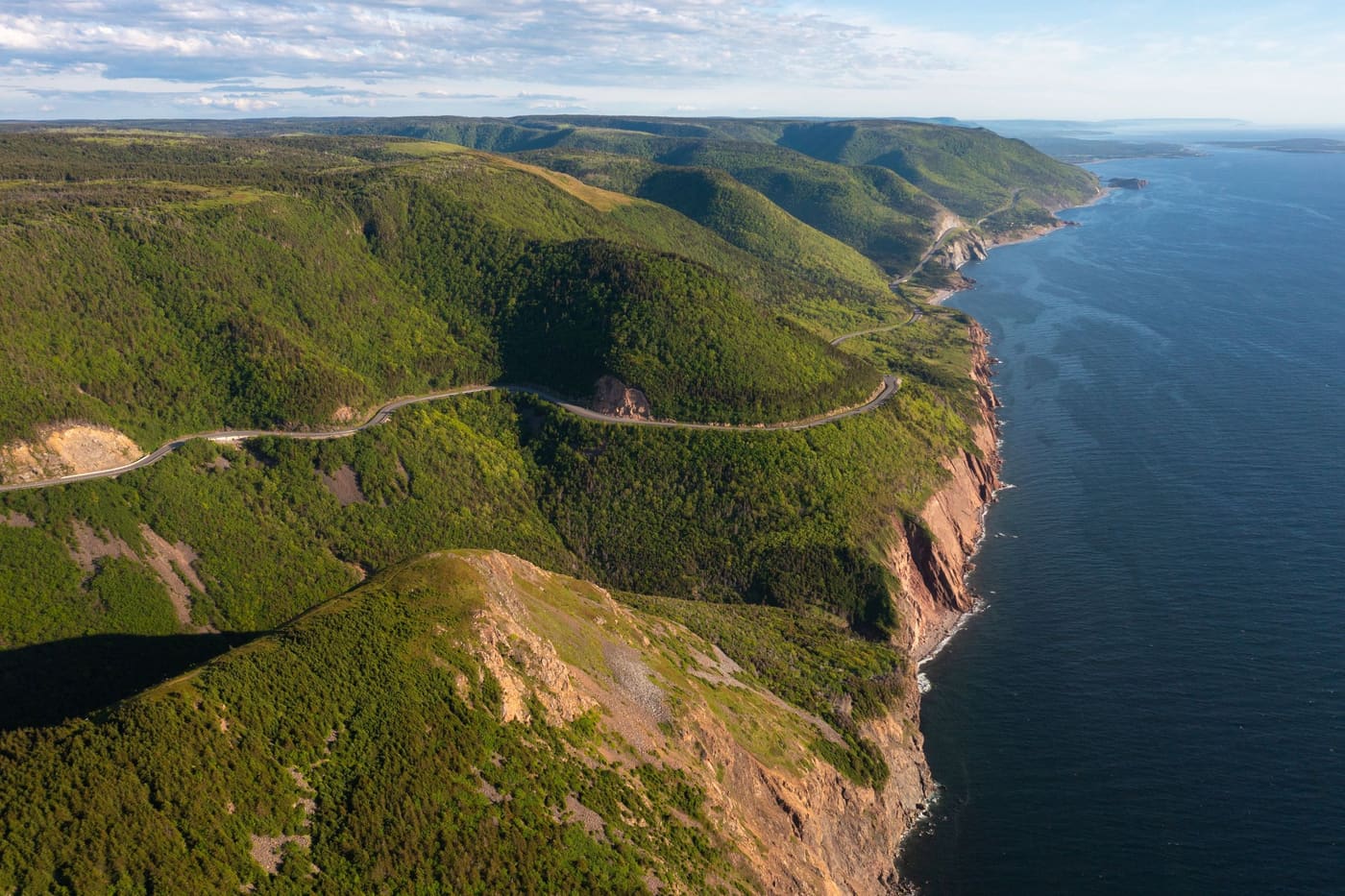
Cabot Trail, Cape Breton
Buying a house in Nova Scotia, step by step
Seven steps from a budget to the keys, for any buyer: first home, next home or moving here from away. What happens at each one, in the order it happens, and the cash it takes.
How do you buy a house in Nova Scotia?
In seven steps: get pre-approved, document your down payment, make an offer with conditions, hire a lawyer, then pay deed transfer tax and closing costs on closing day. On the August 2026 average price of $467,585 that takes about $29,680 to $32,018 in cash, depending on the municipality.
The seven steps to buying a house in Nova Scotia
Buying a house in Nova Scotia, in order
- Budget and pre-approval 1–3 business days Income, debts and credit checked; a price ceiling and a held rate before you view houses.
- Down payment $23,379 on the average At least 5% of the first $500,000 and 10% of the remainder (1–2 units), with a 90-day paper trail.
- Offer and conditions Agreement of purchase and sale Price, deposit, closing date, and conditions for financing, inspection and anything the house needs tested.
- Lawyer 5–7 business days before closing Title search, the mortgage documents, title insurance and registration.
- Deed transfer tax 1.0% to 1.5% Set by the municipality the house is in, paid in cash through your lawyer.
- Closing costs about $1,625 besides the tax Legal fees, recording fees, tax certificate and title insurance, plus adjustments.
- Closing day Keys The lender advances funds, the deed and mortgage are registered, the keys are released.
Timings are typical ranges in our experience, not statistics. Prices from the August 2026 NSAR figures; tax from the July 2026 provincial schedule. Last verified September 20, 2026.
The cash, on the provincial average
| Item | At 1.0% tax | At 1.5% tax |
|---|---|---|
| Minimum down payment | $23,379 | $23,379 |
| Deed transfer tax | $4,676 | $7,014 |
| Legal, recording, tax certificate, title insurance | $1,625 | $1,625 |
| Cash to close | $29,680 | $32,018 |
On $467,585, the August 2026 Nova Scotia average. Legal, recording and title insurance figures are typical ranges observed in Nova Scotia in 2026; confirm with your lawyer. Inspection, appraisal and the lawyer’s adjustments for property tax and fuel are extra and vary by house. Run your own price in the closing cost calculator.
Go deeper
The detail, if you want it
Steps 1 and 2: budget, pre-approval and down payment
Start with the pre-approval, not the listings. A lender checks your income, debts and credit, tests the payment at the greater of the contract rate plus 2% and 5.25%, and holds a rate for 90–120 days. You come away with a price ceiling a seller will take seriously. It costs nothing and takes 1–3 business days once your documents are in. How mortgage pre-approval works →
To see the payment at a given price before you call anyone, use the Nova Scotia mortgage calculator.
The down payment is at least 5% of the first $500,000 and 10% of the remainder (1–2 units): $23,379 on the provincial average. Under 20% down the mortgage is insured, and the premium (4% of the loan at 5% down, about $17,768 on the average) is added to the mortgage rather than paid in cash. Lenders want 90 days of statements showing where the money came from; a gift from family needs a signed gift letter.
Buying your first home changes this step most: the FHSA, the Home Buyers’ Plan and two provincial programs all apply here. They are set out in the guide for a first-time home buyer in Nova Scotia.
Steps 3 and 4: the offer, the conditions and your lawyer
An offer in Nova Scotia is an agreement of purchase and sale: the price, a deposit, the closing date and the conditions you need met before the deal is firm. The usual conditions:
- Financing. Time for the lender to appraise the house and issue a commitment, typically 5–10 business days from acceptance. The appraisal alone takes 2–7 days, longer on rural properties.
- Inspection. A home inspection, and on a rural property a water test and a septic inspection.
- Insurance. An insurer willing to cover the house. Oil tanks and wood stoves are the common sticking points here. Oil tanks, wells and wood heat →
- Lawyer review and title. Your lawyer confirms the seller can give clear title.
Do not waive the financing condition on a verbal approval. Until the lender has signed a commitment on that specific house, your deposit is at risk.
Hire the lawyer while the conditions are running. A Nova Scotia lawyer is required to close: they search the title, prepare the mortgage, arrange title insurance and register the deed and the mortgage at the Land Registry. They need 5–7 business days before closing once the lender sends instructions. The approval timeline, stage by stage →
Steps 5 to 7: deed transfer tax, closing costs and closing day
Deed transfer tax is Nova Scotia’s version of land transfer tax. The municipality sets the rate: 15 charge 1.0%, 3 charge 1.25% and 31 charge 1.5%, on the July 2026 provincial schedule. On the provincial average that is $4,676 to $7,014, in cash. Look up yours on the Nova Scotia deed transfer tax page. A buyer from outside the province who is not moving here also pays the 10% non-resident deed transfer tax.
The other closing costs are legal fees of $850 to $1,000 plus disbursements, $200 in recording fees for the deed and the mortgage, a tax certificate ($125 in HRM) and title insurance, under $300 on a home below $500,000. Your lawyer also adjusts for property tax and fuel the seller has prepaid. Closing costs in Nova Scotia, item by item →
On closing day you have already signed, usually a few days earlier, and given your lawyer the down payment and closing costs. The lender advances the mortgage to the lawyer, the deed and mortgage are registered, the seller’s lawyer is paid and the keys are released. Your first mortgage payment follows on the schedule in your commitment. For how the mortgage itself is approved, see purchase mortgages.

Written by Riley Oickle
Associate Mortgage Broker, Nova Scotia licence 2025-3001134, with Indi, The Independent Mortgage Company Ltd. Every figure on this page links to the government or regulator page it came from.
Why a broker
Licensed, independent, paid by the lender
- Licensed in Nova Scotia Associate broker 3001134, verifiable on the provincial register
- $0 broker fee On a standard residential mortgage the lender pays, not you
- Banks, credit unions, monolines One application, one credit check, placed with the lender that reads your file best
- Every part of the province Bedford office, remote process: Yarmouth to Sydney, the same four steps
Questions people ask
How much money do I need to buy a house in Nova Scotia?
On the August 2026 provincial average of $467,585: a minimum down payment of $23,379, deed transfer tax of $4,676 to $7,014 depending on the municipality, and about $1,625 in legal, recording, tax certificate and title insurance costs. That is roughly $29,680 to $32,018 in cash before inspection, appraisal and adjustments.
How long does it take to buy a house in Nova Scotia?
In our experience a pre-approval takes 1–3 business days once documents are in, and an accepted offer takes 5–10 business days to become a firm mortgage commitment, with the appraisal the longest step. Your lawyer then wants 5–7 business days before closing. The closing date itself is whatever you and the seller agree in the offer.
Do I need a lawyer to buy a house in Nova Scotia?
Yes. A Nova Scotia lawyer searches the title, prepares the mortgage, registers the deed and the mortgage at the Land Registry and pays the deed transfer tax on your behalf. Legal fees typically run $850 to $1,000 plus disbursements and HST; choose the lawyer before your financing condition comes off.
Is there land transfer tax when you buy a house in Nova Scotia?
Yes, under the name deed transfer tax. Each municipality sets its own rate: on the July 2026 provincial schedule, 15 charge 1.0%, 3 charge 1.25% and 31 charge 1.5%, including Halifax Regional Municipality. It is paid in cash at closing and cannot be added to the mortgage.
Can someone from outside the province buy a house in Nova Scotia?
Yes. A buyer who is not a Nova Scotia resident pays an extra provincial deed transfer tax of 10% on residential property with three dwelling units or fewer, including residential vacant land, unless they move here within 6 months of closing. It is charged on the higher of the purchase price and the assessed value, on top of the municipal tax.
Still unsure? Ask me directly.
If your question isn't here, your situation is probably specific. Fifteen minutes on the phone beats reading another page, and nothing is pulled on your credit.
(902) 298-0218 · Monday to Friday, 8:00 am to 10:00 pm Atlantic
Buying a house in Nova Scotia this year?
Send your income, the area and a rough price. You get back the price you can offer on, the down payment and the cash to close for that municipality, within a business day.
(902) 298-0218 · Monday to Friday, 8:00 am to 10:00 pm Atlantic