

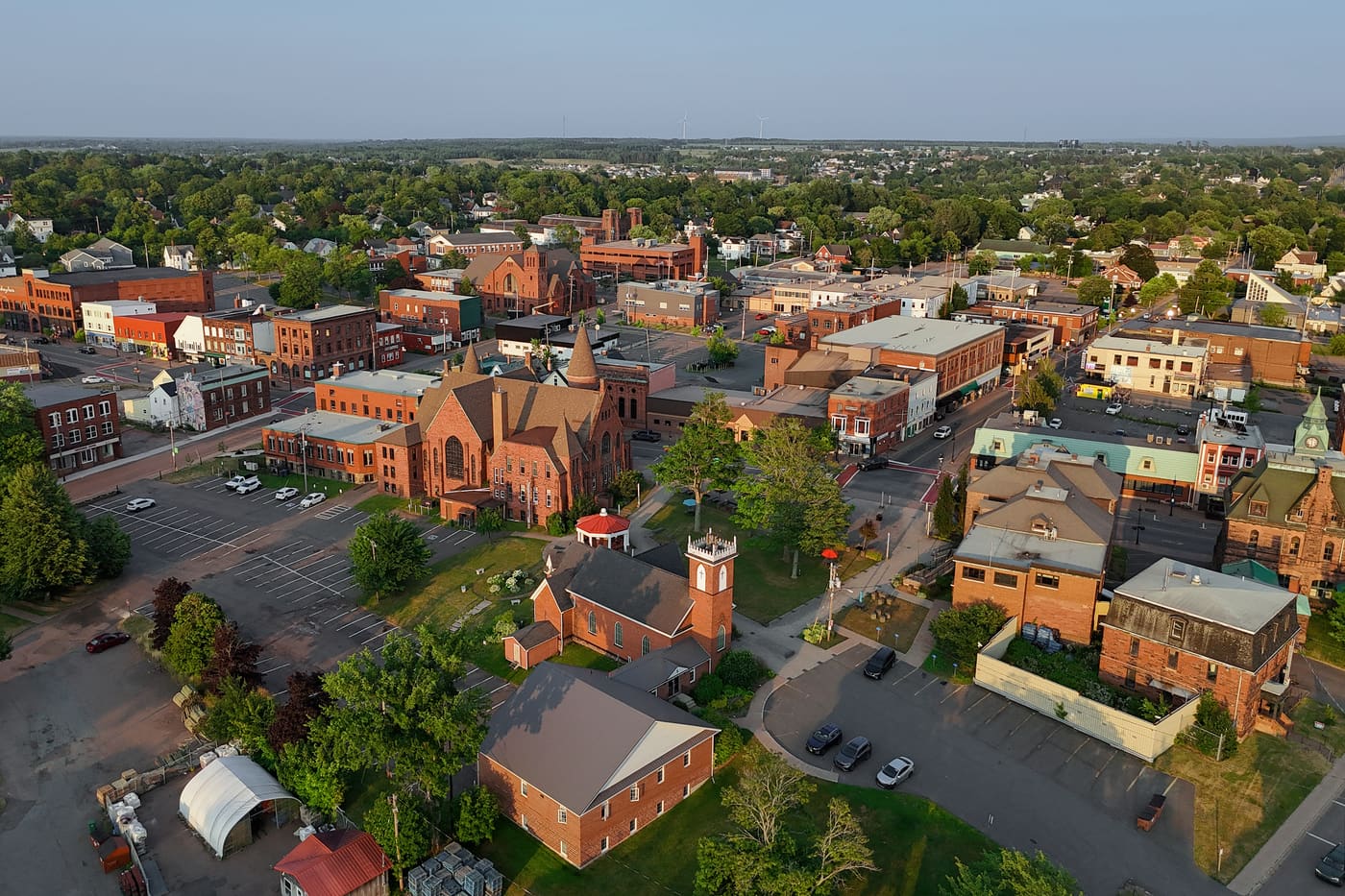
Amherst
Amherst duplex as a rental: 20% down, no insurance
How much do I need down for a non-owner-occupied duplex in Amherst, and how is the rent counted?
How much do I need down for a non-owner-occupied duplex in Amherst, and how is the rent counted?
20%, because no government-backed insurer covers a rental you will not live in, a rule since April 19, 2010. On a $330,000 Amherst duplex that is $66,000 down plus $4,950 of deed transfer tax. How much of the $2,600 monthly rent counts is each lender’s own policy; none publishes the percentage.
Illustrative example
The situation
- Location
- Amherst, Cumberland County
- Borrower
- A registered nurse who owns her home in Amherst, buying a first rental
- Income
- $82,000, salaried; her own mortgage costs $1,350 a month
- Credit
- Mid-700s; no other debt
- Purchase price
- $330,000
- Down payment
- $66,000
- Mortgage
- $264,000
- Payment at 4.45%
- $1,454 a month
- Down payment $66,000
- Mortgage $264,000
Amherst, Cumberland County; Northern Nova Scotia region, where the August 2026 NSAR average was $332,251.
The challenge
A nurse who owns her home in Amherst wanted a first rental: a side-by-side duplex in the east end with both units tenanted. She had $66,000 saved and assumed 5% or 10% down would work as it had on her own house. Her own mortgage of $1,350 a month had to be carried alongside the new one.
What the lender looked at
- 20% down from her own or gifted funds, traceable over 90 days; the home she lives in stays as it is.
- Rental income: lenders either add a percentage of the gross rent to her income or offset a percentage against the payment. That percentage is each lender’s own policy and is not published. CMHC’s insured, owner-occupied approach counts 100% of gross rent on a two-unit and 50% on three or four, a contrast rather than the rule here.
- Both mortgages qualified at the greater of the contract rate plus 2% and 5.25%: $1,760 a month on the duplex, plus her own housing costs.
- The bounds: with none of the rent counted her total debt service is 55%; with all $2,600 added to income it is 40%, against a 44% ceiling. Each lender lands somewhere between.
- Signed leases, a rent roll and the last twelve months of deposits; a vacant unit is counted at the appraiser’s market rent, sometimes discounted.
What was done
The file was placed with a lender whose rental treatment brought the ratios under the ceiling on the leases as signed, at 20% down and no insurance. The two leases, the rent deposits and the appraiser’s market-rent schedule went in with the application. A fifth unit would have made it a commercial mortgage; a duplex stays residential, on residential pricing.
The outcome
Illustrative outcome: a $264,000 conventional mortgage over 25 years at 4.45% (chartered-bank prime rate, Bank of Canada, 2026-09-16), about $1,454 a month against $2,600 of gross rent, before tax, insurance, maintenance and vacancy. Cash on closing: $70,950 for the down payment and Town of Amherst deed transfer tax, plus legal fees.
Go deeper
The detail, if you want it
What to take from it
- Ask the lender for its rental-income policy in writing before the offer; between two lenders it can be the difference between 55% and 40% total debt service.
- 20% is the floor for a rental you will not live in; live in one unit at purchase and CMHC insures at 95% financing with 100% of the other unit’s rent counted.
- At the $332,251 Northern Nova Scotia average, gross rent of $2,600 covers the $1,454 payment with room for tax and repairs; run the same arithmetic before buying at HRM prices.
- Five or more units is a commercial mortgage, underwritten on the building’s income rather than yours; that work lives at indicapital.ca, not here.
How the figures were computed
This is an illustrative example. The people, the property and the outcome are not real; the rules and the arithmetic are. Prices are the August 2026 regional averages from Nova Scotia Association of REALTORS® / CREA monthly statistics, or a stated example price; the deed transfer tax is the municipal rate on the provincial schedule; premiums are CMHC’s published schedule; qualifying uses OSFI’s rule. The contract rate is named in the outcome with its source. Legal, recording and title figures are typical ranges, not quotes.
- www.canada.ca: https://www.canada.ca/en/news/archive/2010/02/government-canada-takes-action-strengthen-housing-financing.html
- www.cmhc-schl.gc.ca: https://www.cmhc-schl.gc.ca/professionals/project-funding-and-mortgage-financing/mortgage-loan-insurance/mortgage-loan-insurance-homeownership-programs/rental-income
- www.cmhc-schl.gc.ca: https://www.cmhc-schl.gc.ca/professionals/project-funding-and-mortgage-financing/mortgage-loan-insurance/mortgage-loan-insurance-homeownership-programs/cmhc-purchase
- www.osfi-bsif.gc.ca: https://www.osfi-bsif.gc.ca/en/supervision/financial-institutions/banks/minimum-qualifying-rate-uninsured-mortgages
- novascotia.ca: https://novascotia.ca/sns/pdf/ans-property-dtt-rates.pdf
- creastats.crea.ca: https://creastats.crea.ca/board/nsar/
How it works
From first call to keys, in four steps
-
A 15-minute call
You say what you’re trying to do and roughly what you earn.
Riley tell you the price a lender will support, the cash you need to close, and what to fix first.
-
Documents and pre-approval
You send the short list through a secure upload link.
Riley package the file and come back with a pre-approval letter and a rate held 90 to 120 days.
-
Lenders, side by side
You read the comparison and pick.
Riley place one application with banks, credit unions and monolines, and show you every answer.
-
Approval, lawyer, keys
You sign with your own local lawyer.
Riley hold the lender, appraiser and lawyer to the closing date.
Why a broker
Licensed, independent, paid by the lender
- Licensed in Nova Scotia Associate broker 3001134, verifiable on the provincial register
- $0 broker fee On a standard residential mortgage the lender pays, not you
- Banks, credit unions, monolines One application, one credit check, placed with the lender that reads your file best
- Every part of the province Bedford office, remote process: Yarmouth to Sydney, the same four steps
Questions people ask
Could she have bought it with 5% down by moving in?
Yes. Owner-occupied two-unit homes are insurable at 95% financing, so $16,500 down instead of $66,000, with the premium added and 100% of the other unit’s rent counted. The occupancy rule is about the day you buy; she would have had to move.
Why is there no CMHC premium on the rental?
Because since April 19, 2010 government-backed mortgage insurance has not been available on a non-owner-occupied property, so there is no premium to pay and no way to borrow above 80%. The 20% is the whole of the protection the lender has.
What if one unit had been vacant?
The appraiser sets a market rent for the vacant unit and the lender uses that figure, often discounted; with $1,350 from the upper unit and the lower vacant, the file would have been tested on the appraiser’s number rather than a lease. A signed lease before closing is the cleanest fix.

Still unsure? Ask me directly.
If your question isn't here, your situation is probably specific. Fifteen minutes on the phone beats reading another page, and nothing is pulled on your credit.
(902) 298-0218 · Monday to Friday, 9:00 am to 5:00 pm Atlantic
Sent. Thank you.
Your details went straight to Riley. He replies within one business day, usually sooner, by phone or email.
Need it faster? Call (902) 298-0218, Monday to Friday, 9:00 am to 5:00 pm Atlantic.
Your numbers, not the regional average
Send the listing or the statement and a rough income. You get back the same worked arithmetic on your actual figures, in writing, within a business day, at no fee.
(902) 298-0218 · Monday to Friday, 9:00 am to 5:00 pm Atlantic